


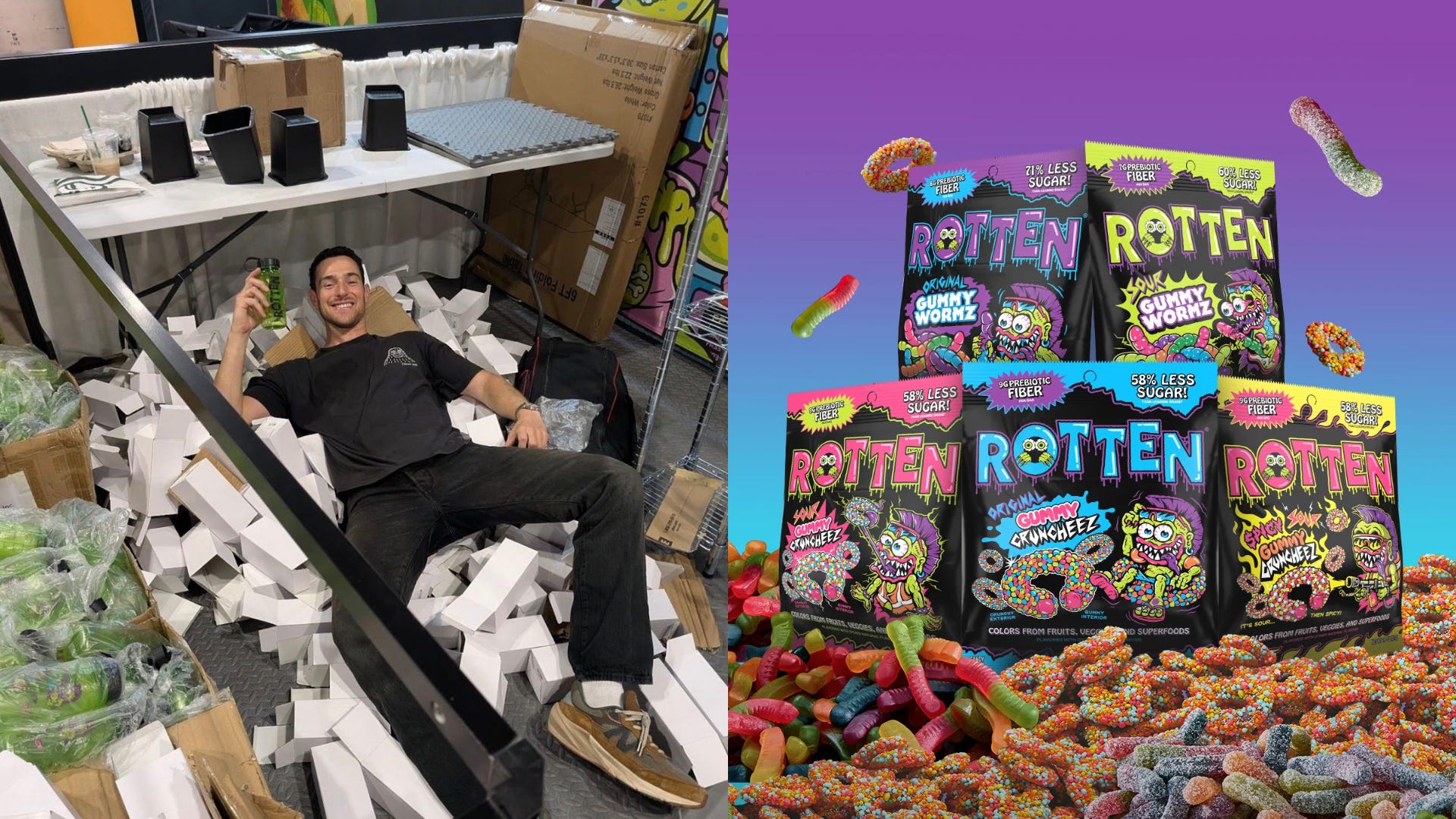
“The idea of healthy candy is off-putting.” That was Michael Fisher’s problem when he tried cutting back on sugar, but still craved candy.
“Candy’s supposed to be pure, delicious, indulgent fun,” he says. “Even if it has health attributes. I didn’t want it to feel diet.” That insight became Rotten, candy first, health second. By leaning into brand and taste, Michael carved out space in one of the toughest categories in CPG.
00:16 - The mind behind Rotten
02:43 - Gross market value
04:50 - Raise the roof
07:26 - Found a food scientist. Sweet.
09:11 - Candy = Can do
11:31 - You never forget your first
13:58 - Retail is in the details
16:54 - Ride the sugar rush
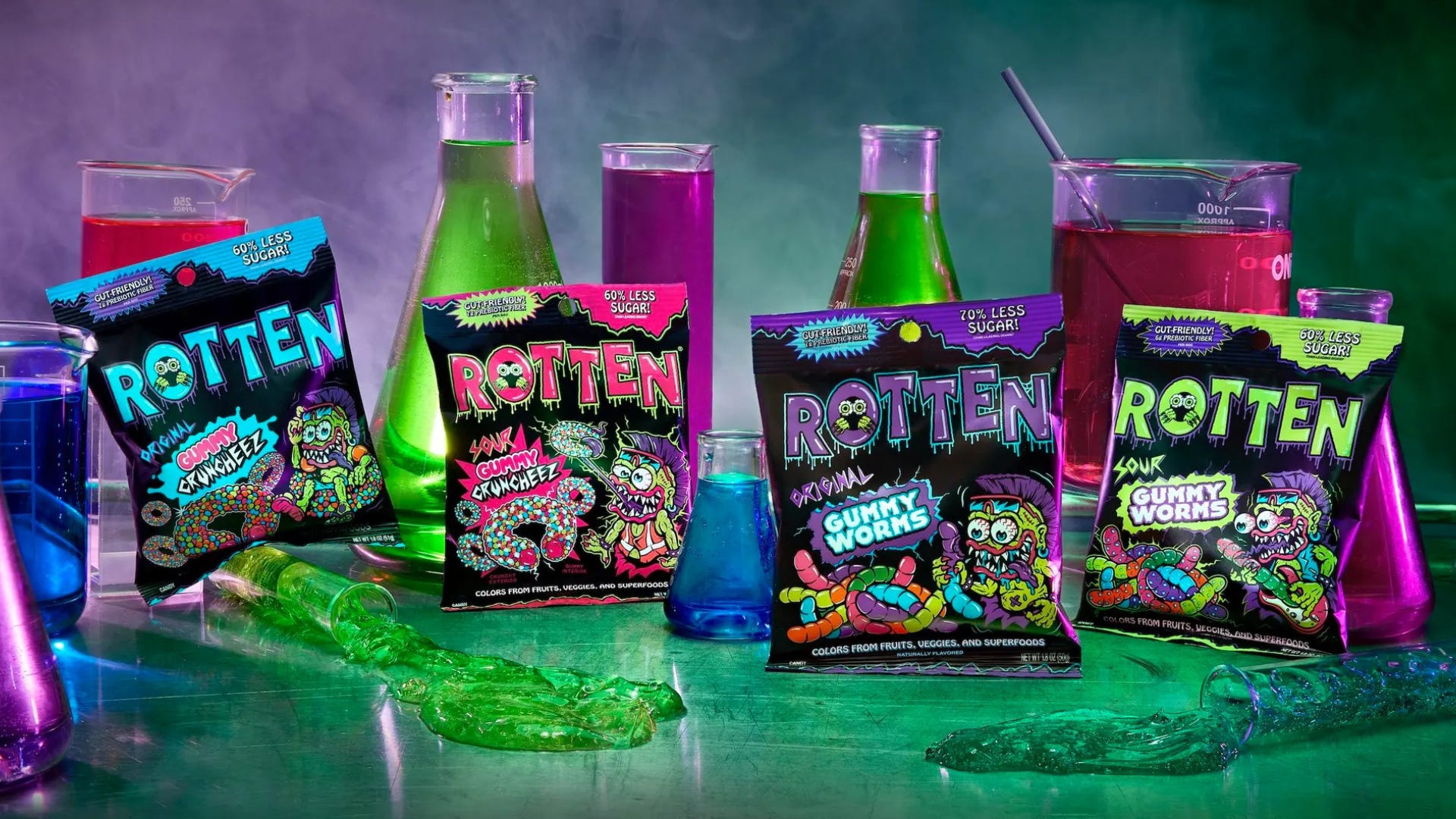
Candy first, health second. Most better-for-you brands focus on what they remove. Rotten focuses on what it adds: more color, more character, more fun. “I still wanted the brand to feel like a fun, awesome candy brand,” Michael says. “I didn’t want it to look healthy. I didn’t want it to feel diet.”
Build a world, not an SKU. Legacy candy wins on shelf space and budgets. Rotten couldn’t play that game, so it built its own: characters, names, and backstories inspired by 80s/90s gross-out humor (Garbage Pail Kids, Nickelodeon slime, Dr. Dreadful). That created equity without the ad spend.
Treat DTC as your test kitchen. Rotten hit 4x its Kickstarter goal in hours, then launched DTC online to refine the product in real time. Every order, review, and comment became a data point. “We can spot issues like almost immediately from customers receiving product and letting us know about it,” Michael says.
Don’t hide in the health aisle. Candy doesn’t sell if it looks like medicine. Rotten sells best merchandised with the regular candy people are already buying. Health is the bonus, not the billboard.
Market signal → Consumers want functional treats, but they don’t want them to feel functional. The winners make indulgence the headline and health a bonus.
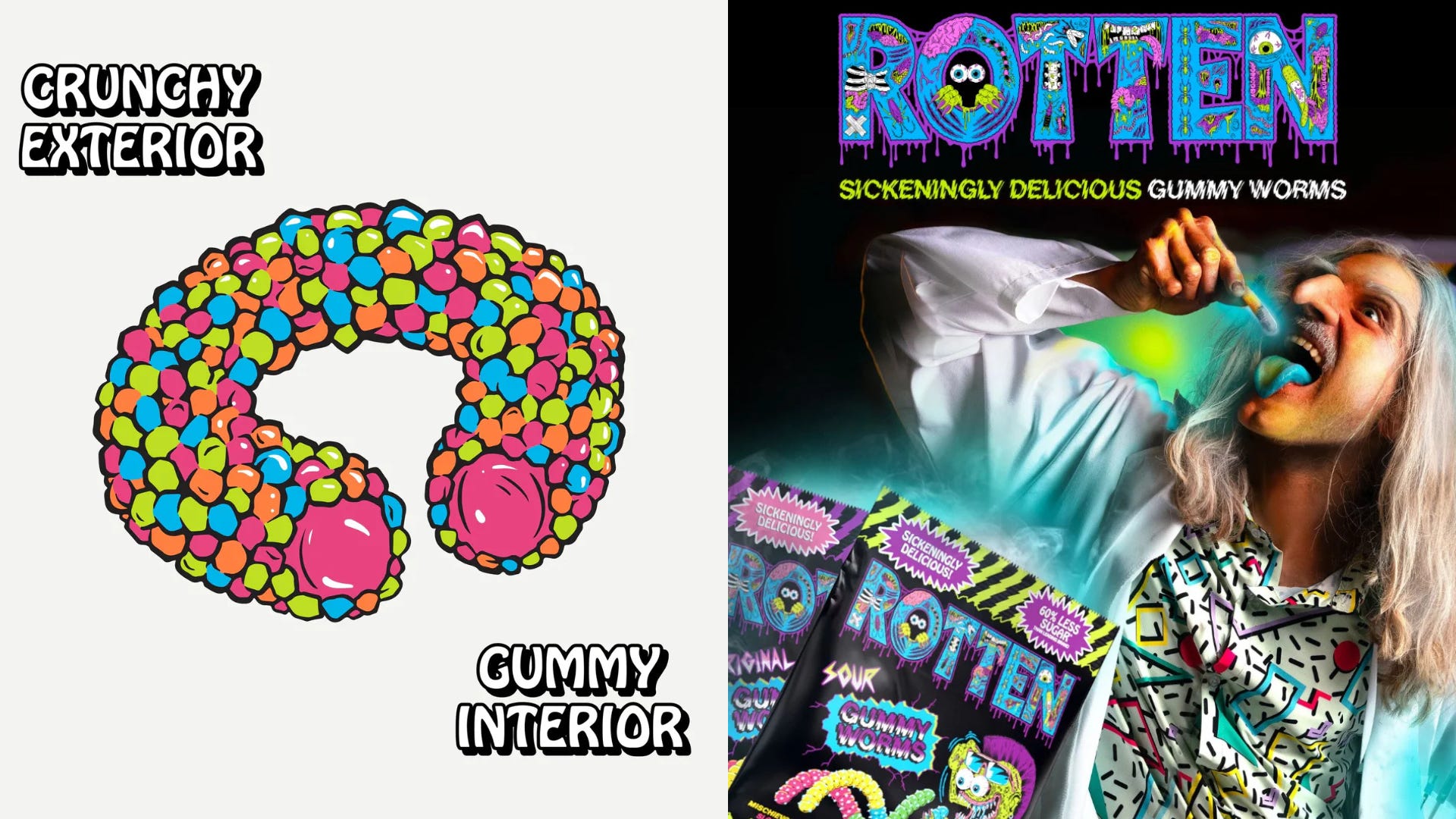
Lead with cravings, not claims
Healthy claims don’t sell candy, cravings do. Lead with flavor, fun, and indulgence. Then back it up with better ingredients.
Does your product grab attention with fun or indulgence first?
Are health claims supportive (not the headline)?
Would kids want it based on look and taste alone?
Would parents feel good about buying it once they flip the pack over?


