


Happy Tuesday. This week, we’re sharing:
How a senior nutrition company secured multi-millions to shake up a stale category
The Instacart strategy that takes you from 2x to 15x ROAS
The biggest one-month jump in grocery prices, where everyone’s getting their health advice, say bye to your caprese salad

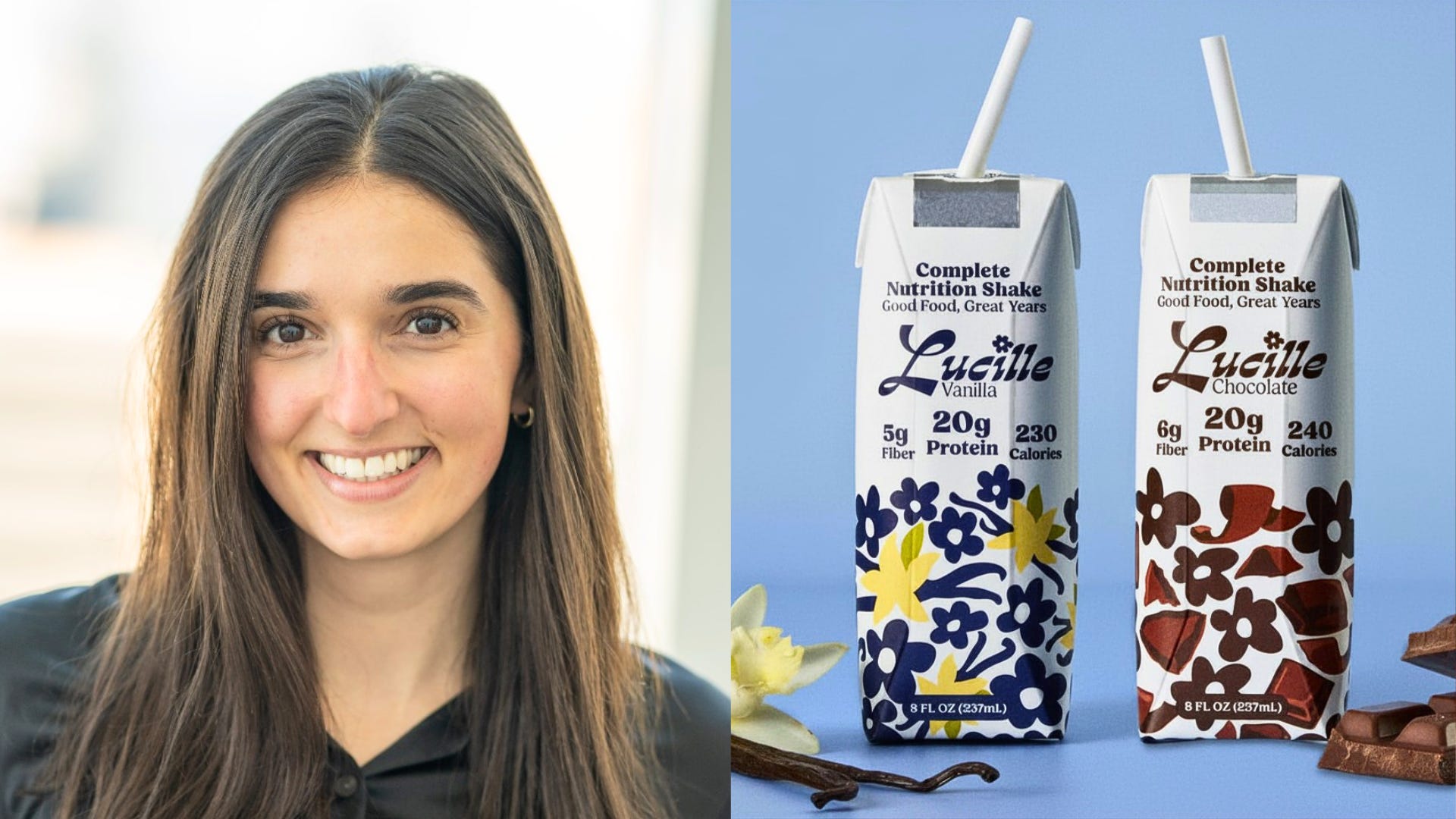
Meet Jess Haghani, founder of Lucille, the first better-for-you senior nutrition shake that just closed a multimillion-dollar funding round.
The company is named after her 92-year-old grandmother, who still drives herself into the city, day trades, and says her 90s are the best years of her life. But when Lucille started facing health challenges, the nutrition drinks meant to help her were so bad she could barely finish them.
Jess took it to nutritionists at the Harvard T.H. Chan School of Public Health. Their reaction: she couldn’t engineer a worse ingredient list if she tried.
Nutrition for older adults hadn’t really changed since the 1980s. Someone needed to do something about this. That someone, it turns out, had a grandmother named Lucille.
00:14 - The mind behind Lucille
02:40 - Her 90s are the best time of her life
04:49 - I can’t put a single worse ingredient in any of these shakes
07:17 - Grandma Lucille is our lead tastemaker and she’s quite opinionated
10:01 - It’s simple, it’s nutrition for older adults
12:47 - Not going to sugarcoat it, raising is really hard
15:57 - The end consumer matters the most
18:47 - A feeling like nothing I’ve ever experienced
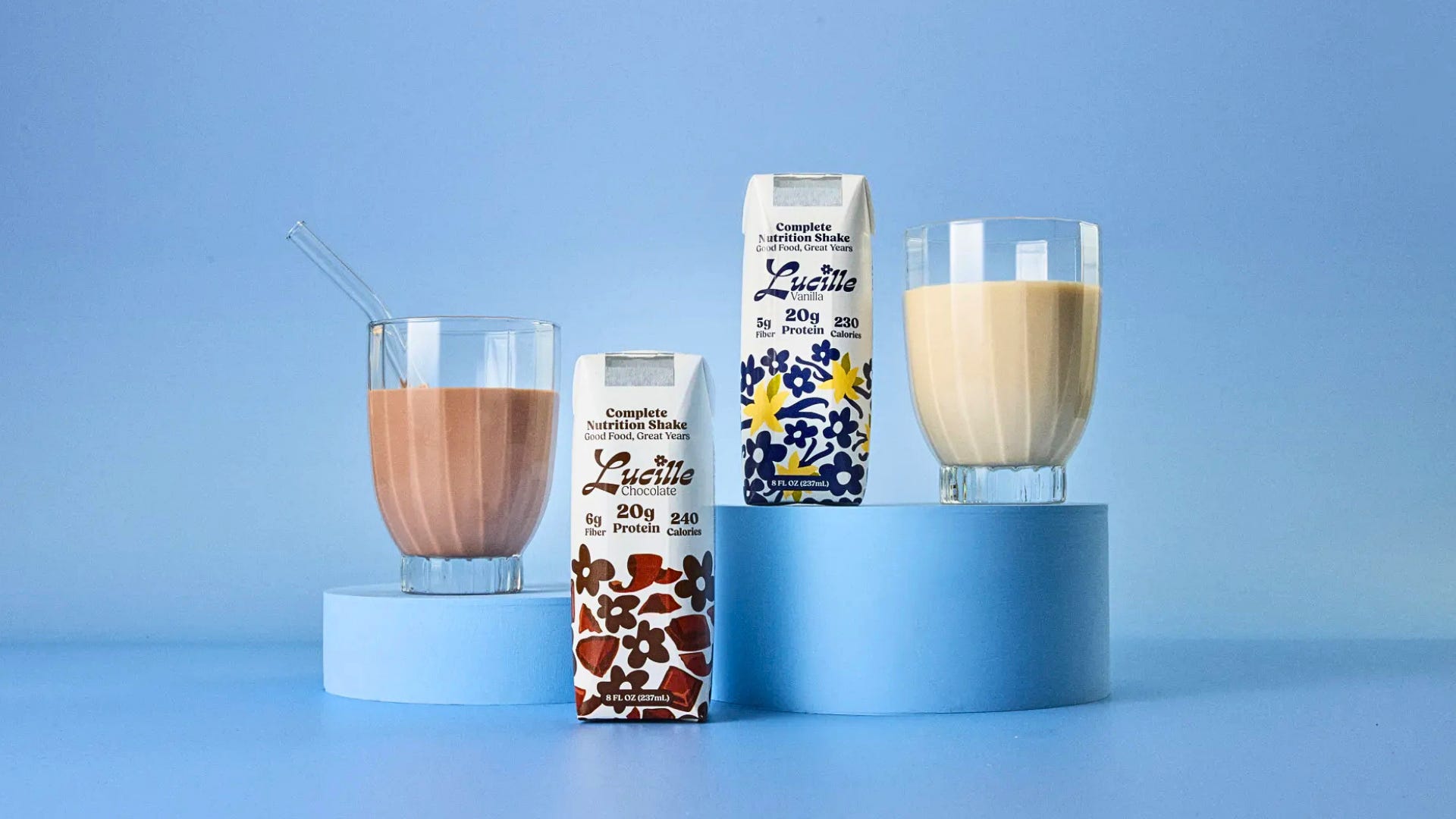
40 years: How long the senior nutrition category has gone without meaningful innovation
10 months: From first test to market-ready formula
0: Ingredients shared with existing incumbents (other than water and salt)
The biggest opportunity in CPG isn’t a niche. It’s a blind spot. Adults 65+ are nearly 20% of the US population, yet account for less than 1% of food and beverage innovation. The products designed to help them haven’t changed since the 1980s. Nearly 50 years of neglect in one of the largest consumer segments in the country. That’s not a gap. That’s an wide-open opportunity.
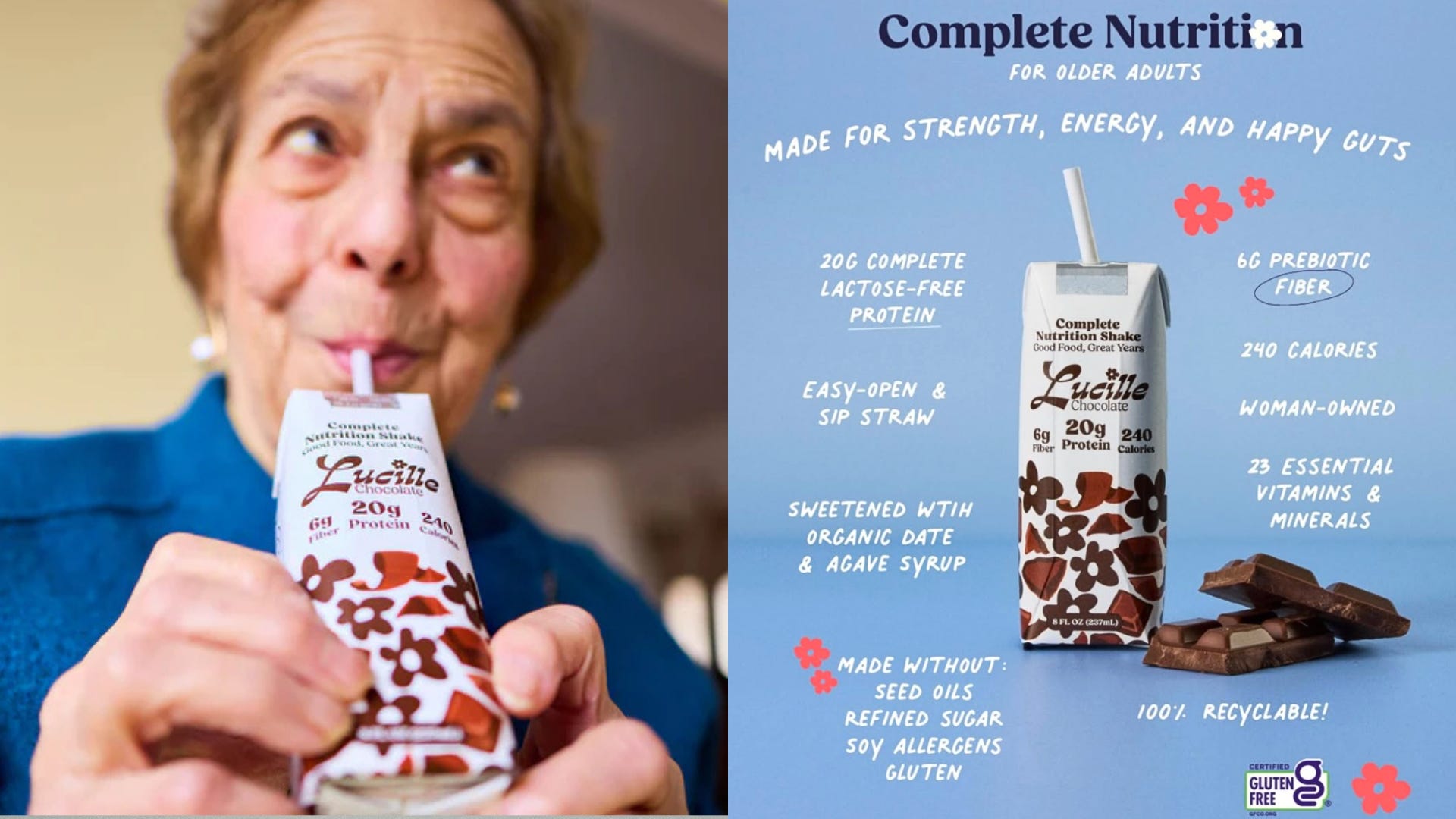
Study what’s broken, not what’s working. When Jess brought existing products to the Harvard T.H. Chan School of Public Health, the nutritionists didn’t suggest improvements. They told her to throw them out. “I cannot put a single worse ingredient in any of these if I tried.” She started from scratch, using none of the same ingredients except water and salt. Most brands try to slightly improve what already exists. Sometimes the better move is to see what’s broken and start over.
The end consumer and the buyer are different people. You have to win both. In senior living, the resident doesn’t choose what gets stocked. The facility does. That means Lucille has to be delicious enough for residents to finish the product, and effective enough for buyers to justify the premium. Jess started at the source. When residents like what they’re drinking, outcomes improve, waste lessens, and the cost per serving works itself out.
Feedback is just raw material. Pattern recognition is the real skill. Jess ran blind taste tests, hosted events at senior living communities, sampled at conferences. She heard all kinds of opinions: loud, contradictory, occasionally stinging. “There will be a lot of noise. One person’s feedback can sting harder, but it’s not representative of the majority.” The job isn’t to listen to everyone. It’s to identify the difference between personal opinion and larger pattern.
Packaging is part of the product. Lucille’s lightweight carton, disposable straw, and easy-puncture tab aren’t just nice design. They’re accessibility. As people age, things like grip strength, joint mobility, and dexterity change. A tightly sealed cap that feels normal to most consumers can become a daily frustration. Removing that is part of what makes the product stand out.
Market signal → The best opportunities in CPG aren’t always in what’s trending. Sometimes they’re in who’s been ignored.
The blank page brief
The instinct is to study the incumbents and iterate. The problem is you end up building a better version of something that’s already wrong. Start here instead:
Autopsy the incumbent. Don’t look at what’s working. Look at what are settling for because nothing better exists.
Write your negative brief. What would you never put in your product? What would you never compromise? Sometimes the “no” list matters more than the feature list.
Find what nobody ever tried. Not what the category does badly. What it never attempted at all. The unasked questions are where the white space lives.
Build from scratch, then compare. Pretend the category doesn’t exist. What would you make? Then compare it to what’s on shelf and find your differentiators.
Turn the gap into the pitch. The distance between what exists and what you built is the story. Not “we’re better.” Better for who? Better how? Better why?


Most CPG founders think about Instacart wrong.
They see it as a logistics channel. A way to get product into grocery orders. Something that “just runs in the background.” And because of that, they set it up once, let it run on auto, and wonder why results are mediocre.
Here’s what the brands actually winning on Instacart understand: it’s not a delivery app. It’s a media platform. And once you see it that way, everything changes.
Mateusz Drela, founder of RMIQ, has spent 17 years in performance marketing helping CPG brands drive real sales through retail media. Here’s how he thinks about Instacart.
Instacart is the great equalizer. Because Instacart has no physical shelves, it has no physical shelf politics. No slotting fees for eye-level placement. The algorithm doesn’t know your revenue. It knows your bids and your relevance. That’s it. And crucially: when a shopper types “tortilla chips” into Instacart, they’re not thinking about you. They’re browsing. That’s the moment you win them.
The one format that actually moves product. Instacart offers a suite of ad products: Reach, Engage, Acquire. Ignore most of them. The format that matters is Sponsored Products (also called Sponsored Search). It’s the only format directly tied to sales velocity. Ads appear where decisions get made: search results, homepage, “frequently bought with” sections, and checkout.
A note for early-stage brands. If you’re spending under $150/day on Instacart, A/B testing is probably a waste of time. You won’t reach statistical significance fast enough to draw conclusions. Instead, run auto campaigns first. Not as your long-term strategy, but as a keyword harvesting tool. Let the algorithm identify what’s converting. Take those insights, build a manual campaign, and go from there.

The biggest one-month jump in grocery prices in nearly four years: The category called “food at home” (aka, your grocery store)
Where are you getting your health advice? If you’re like half of U.S. adults under 50, the answer is influencers and podcasters.
Say bye to your caprese salad: The price of tomatoes are up almost 30%.
When Costco says, “I’m built different”: Why Costco pays $30/hr and Target doesn’t.
The most-followed big box retailer on TikTok: Target launches Club Target and Target Ambassadors (after retiring its previous commissions-based creator program).
Groceries get a side gig: Prepared food sections grew 2.8% in dollar sales and 1.8% in unit sales the last year.

May 19 (NY): Consumer Founders Rooftop Happy Hour
May 20 (Virtual): Workshop: AI for CPG Brands
May 20 (NY): DTC Dinner Club
May 20 (NY): How Smart Brands Win in a Crowded Aisle
May 20-21 (NY): The Lead Summit
May 21 (Virtual): Where the Dogs Of Society Howl: CPG, Growth, and the Exit Nobody Posts
May 31 (Virtual): Bon Appetit Pantry Awards Submission Deadline
June 3 (NY and Virtual): Clicks, Bricks & Everything In-Between
June 7-9 (Orlando): IDDBA 2026
June 10-11 (Chicago): 2026 KeHE Holiday Show
June 28-30 (NY): Summer Fancy Food Show
June 29 (NY): The Early Round: Founders & Investors


