


Happy Tuesday. This week, we’re sharing:
🍷 How a first-time founder got canned wine into 200 stores, one door at a time
📰 Gen Z goes modular, when east meets west, everyone’s going private
☀️ Shows of summer: IDDBA, KeHE Holiday Show, Summer Fancy Food Show, IFT First

Meet Hogan Burrell, founder of PNKYS, a canned wine brand for people who like wine but aren’t “wine people.”
The idea started after a trip to Mexico, some questionable water, and a case of salmonella. During recovery, his doctor suggested red wine as one of the alcoholic drinks easier on the stomach.
So Hogan started ordering wine at bars. Looking for it at parties. The problem? Every trip down the wine aisle left him more confused than when he walked in. Cursive labels, complicated tasting notes, no idea why one cost $15 and another $150.
What he wanted was something simpler.
So he cashed out his 401k and spent more than a year figuring out self-distribution and how to build a brand that sells.
Today, PNKYS is in nearly 200 independent accounts, in conversations with major retailers, and scaling the old-fashioned way: one door at a time.
00:14 - The mind behind PNKYS
03:46 - The easiest to drink, that’s what we want
07:34 - Quit my job, cash out 401K, cash out savings
11:03 - 70% off premise, 30% on premise
14:15 - The exact opposite of every other wine brand
17:29 - Raising close to half a million right now
20:15 - I would do it all over again 100 times
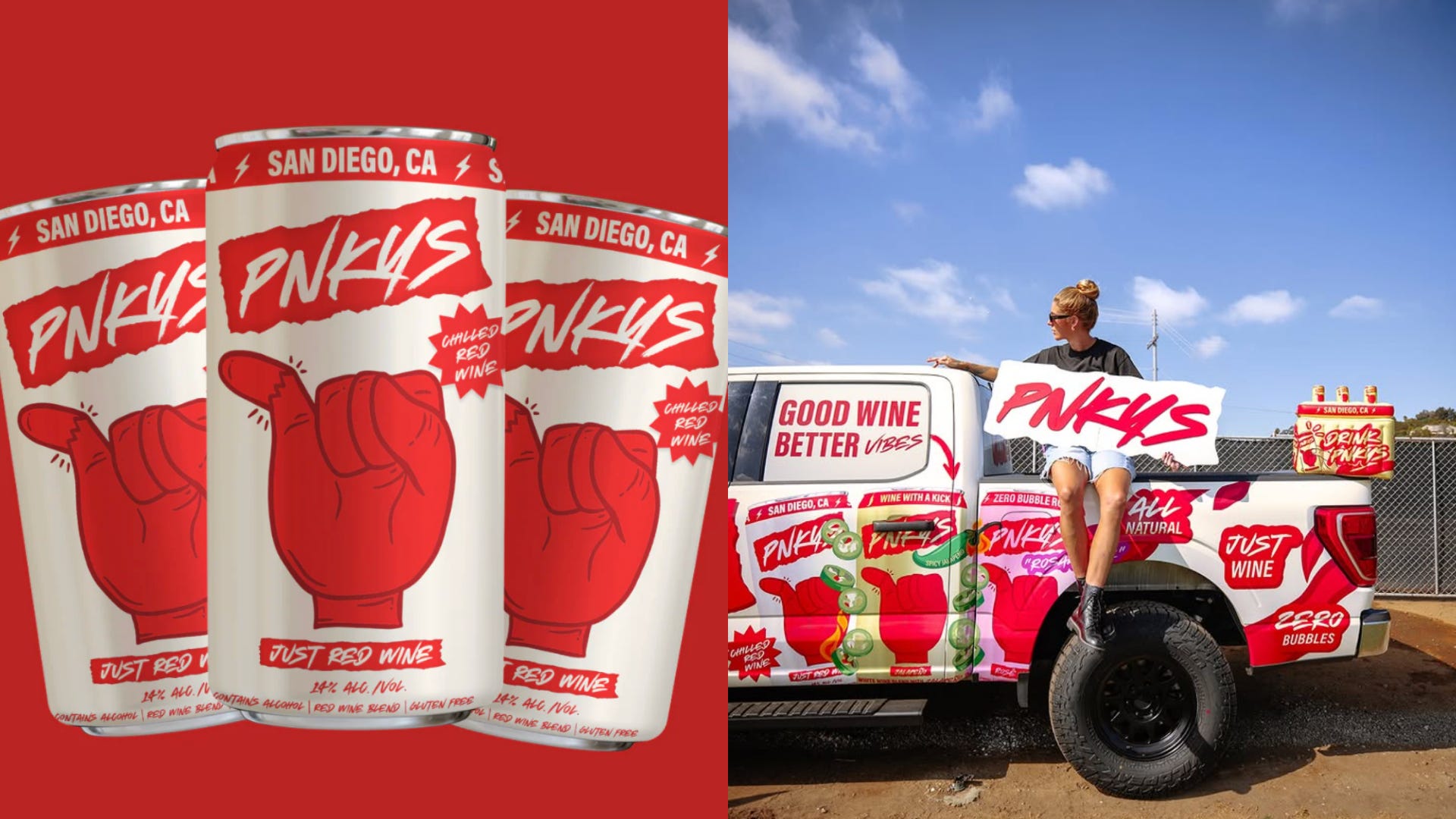
$60K: Initial investment from his 401k and personal savings
~200 accounts: Self-distributed as a one-man team
4–5/week: Number of in-store demos Hogan still does himself
Remove as much risk as possible for the retailer. When Hogan started pitching PNKYS to retailers, he thought they’d care about the brand story. Most didn’t. They wanted to know one thing: Will it sell? A new brand has no velocity data, no distributor, and no track record. Every reason to say no. So Hogan made the decision easier. He did tastings, promotions, and if the product didn’t move within 30 days, he’d buy it back.
The goal of a demo isn’t to create a sale. It’s to create a repeat customer. Hogan runs four or five tastings a week but caps new stores at two per month. Because retailers want to know what happens when the founder leaves. If sales only happen while you’re pouring samples, that’s not proof of demand. That’s proof you’re good at selling. The real test is whether someone comes back and buys it again when nobody’s watching.
Use trends to open doors, and your core products to stay there. Last summer, everyone was putting jalapeños in their Sauvignon Blanc. Hogan spotted it and launched a canned version before anyone else. “It’s fun and it’s definitely a door opener,” says Hogan. “If there’s an account we want, we’ll approach with the Jalapeño Sauvignon Blanc, let that sell, then bring our others on.”
Know what you’re actually selling. PNKYS is organic, well-made, and tastes good. But Hogan barely talks about that. He talks about “wine that just pairs well with vibe.” In a category obsessed with tasting notes and terroir, PNKYS competes on something else entirely: bright colors, tailgates, and high energy. The product is canned wine. The thing being sold is a good time.
Increase your surface area for luck. Hogan found his winery through a connection of a connection. He showed up to Expo West even though it was mostly non-alc. Neither opportunity promised an immediate payoff. One led to a production partner. The other validated the brand. Put yourself in more rooms. You never know which conversation changes the trajectory of the business.
Market signal → Over time, categories optimize for enthusiasts. Language gets more technical. Experience gets more intimidating. The opportunities are at the edge, where people are waiting for something made for them.
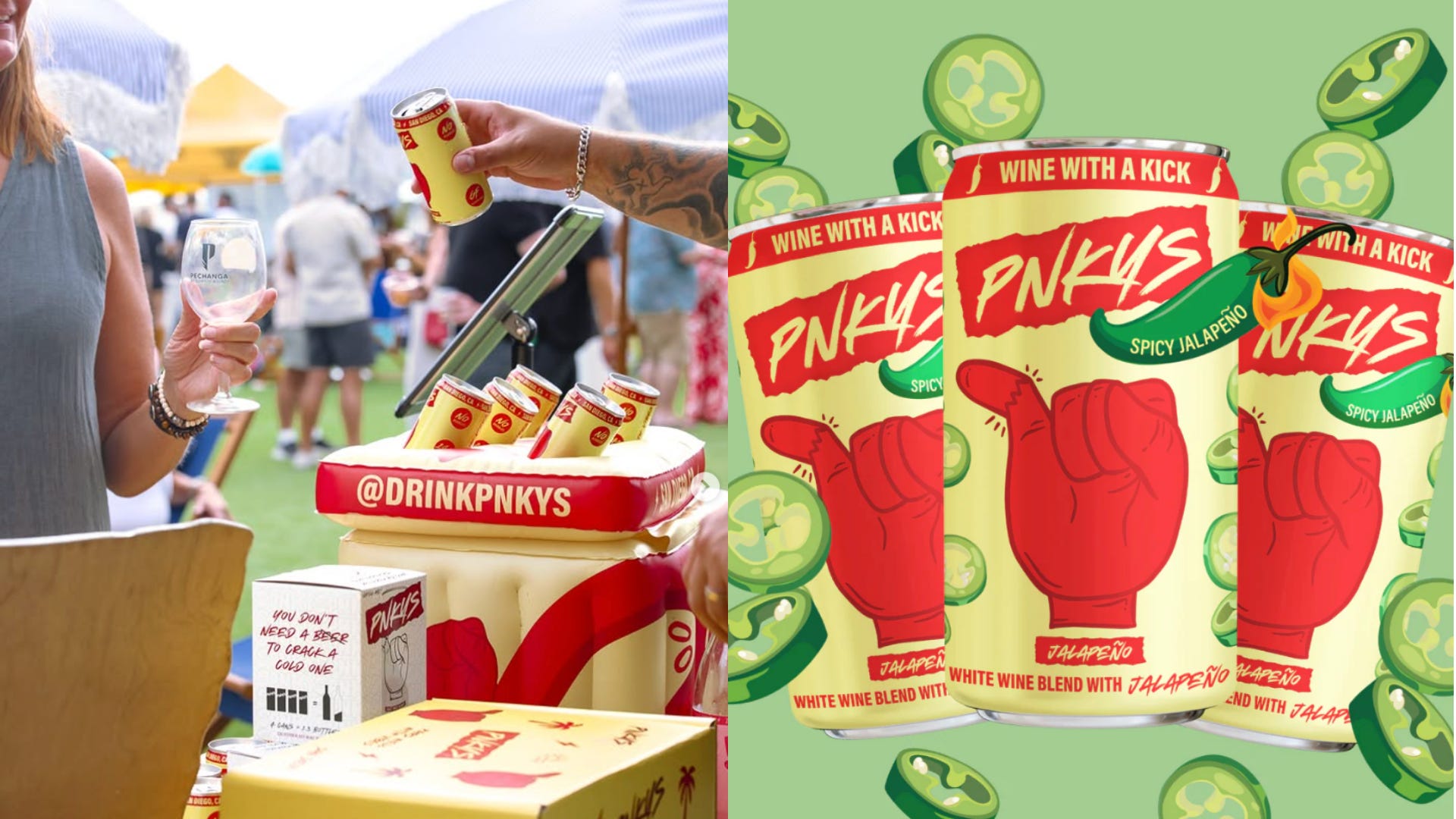
The retailer pitch checklist
Retailers aren’t buying your vision. They’re buying confidence that the product will move. Before your next pitch, make sure you can answer yes to all five:
Do you know where the product fits? Walk the store first and have a shelf placement in mind.
Do you know their margin? Most independents have a required margin range. Know it before the meeting and show how your pricing fits.
Can you reduce their risk? Buybacks, small opening orders, or flexible terms all make it easier to say yes.
Can you commit to driving sales? Demos, sampling, and in-store support show you’re invested.
Can you prove demand? Reorders from another account are gold, but repeat purchases and strong sell-through count too.
Have all five and you're not pitching; you're making it easy to say yes.

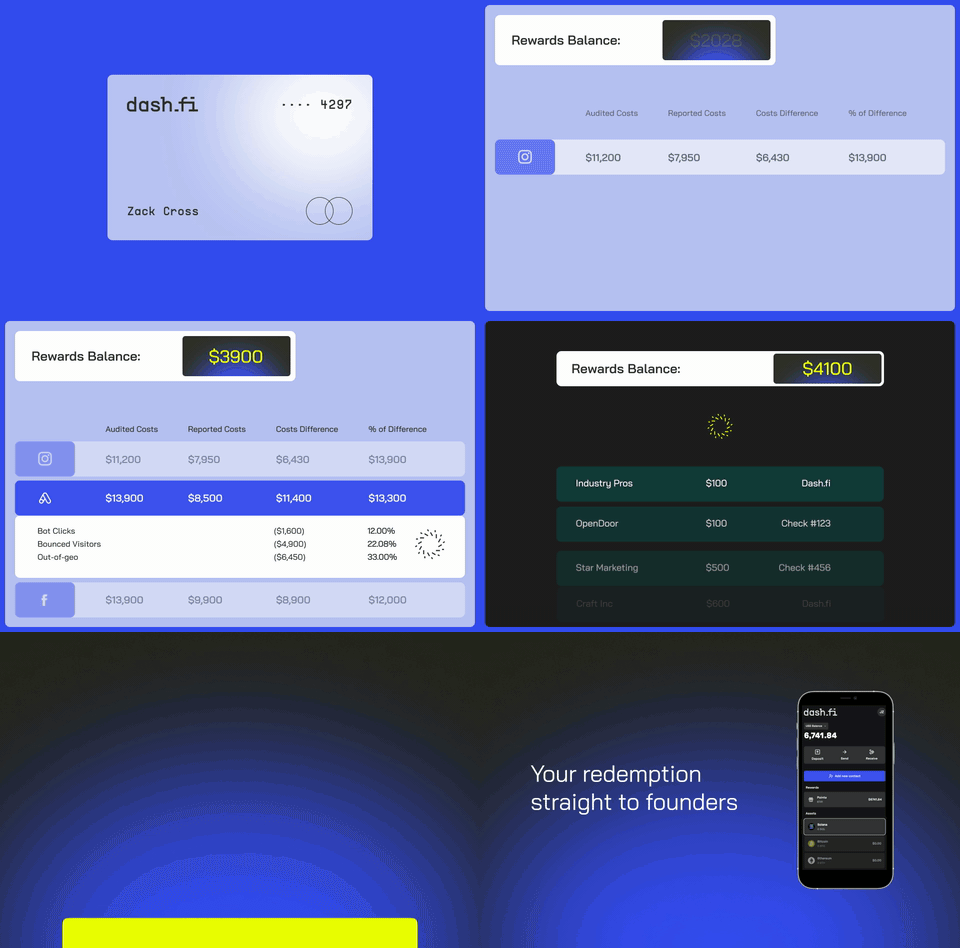
You’re already paying your invoices. But you could be earning on them.
Every time you pay a vendor via ACH or check, you’re leaving money on the table. Not because the invoice is wrong. Because you’re paying it the wrong way.
Most CPG brands have vendors who accept cards. They just never checked.
Our partner Dash.fi identifies which vendors accept cards automatically. Switch the payment method, start earning 3% back on those invoices. Done.
No manual reconciliation. No ops overhead.
Chances are you have more card-eligible vendor spend than you think. From invoices you’re already paying.
5 minutes to see how much you’re leaving on the table. See what Dash.fi recovers for you.

When east meets west: Consumers prefer authenticity over adaptation.
Nestlé acquires yfood: 3 months after Danone acquires Huel (and the 1st acquisition of new CEO Philipp Navratil).
Going private: Private label sales are onward and upward, reaching a record $283 billion last year.
… and it all starts with the morning cup: Private label wakes up and smells the coffee.
Gen Z wants a bit of this, a bit of that: Modular eating is the latest food trend.
The sweets and snacks winners: 2 new awards (Trailblazer and Powerhouse) and a lot of mix-and-match texture.
Tip your delivery driver: Instacart and DoorDash are the least stable gig work, fluctuating heavily based on order volume, variability, and location density.

June 7-9 (Orlando): IDDBA 2026
June 10 (Virtual): Live Packaging Audit: How to Make Your Brand Stand Out on Shelf
June 10-11 (Chicago): 2026 KeHE Holiday Show
June 11 (NYC): The FreshPitch: A Brand Pitch & Discovery Event
June 11 (Virtual): Getting Your Brand in the Media
June 12 (TX): Pre-Match Dinner
June 16 (Virtual): How GLP-1 Is Reshaping Food, Nutrition & Supplements
June 28-30 (NYC): Summer Fancy Food Show
June 18 (NYC): Margs & Momentum: A Summer Fancy Food Show Celebration
June 28 (NYC): Startup CPG Founder Dinner @ Summer Fancy Food 2026
July 7 (Virtual): The TikTok Shop Launch Playbook
July 12-15 (Chicago): IFT First
July 19-24 (New Orleans): Tales of the Cocktail 2026


