


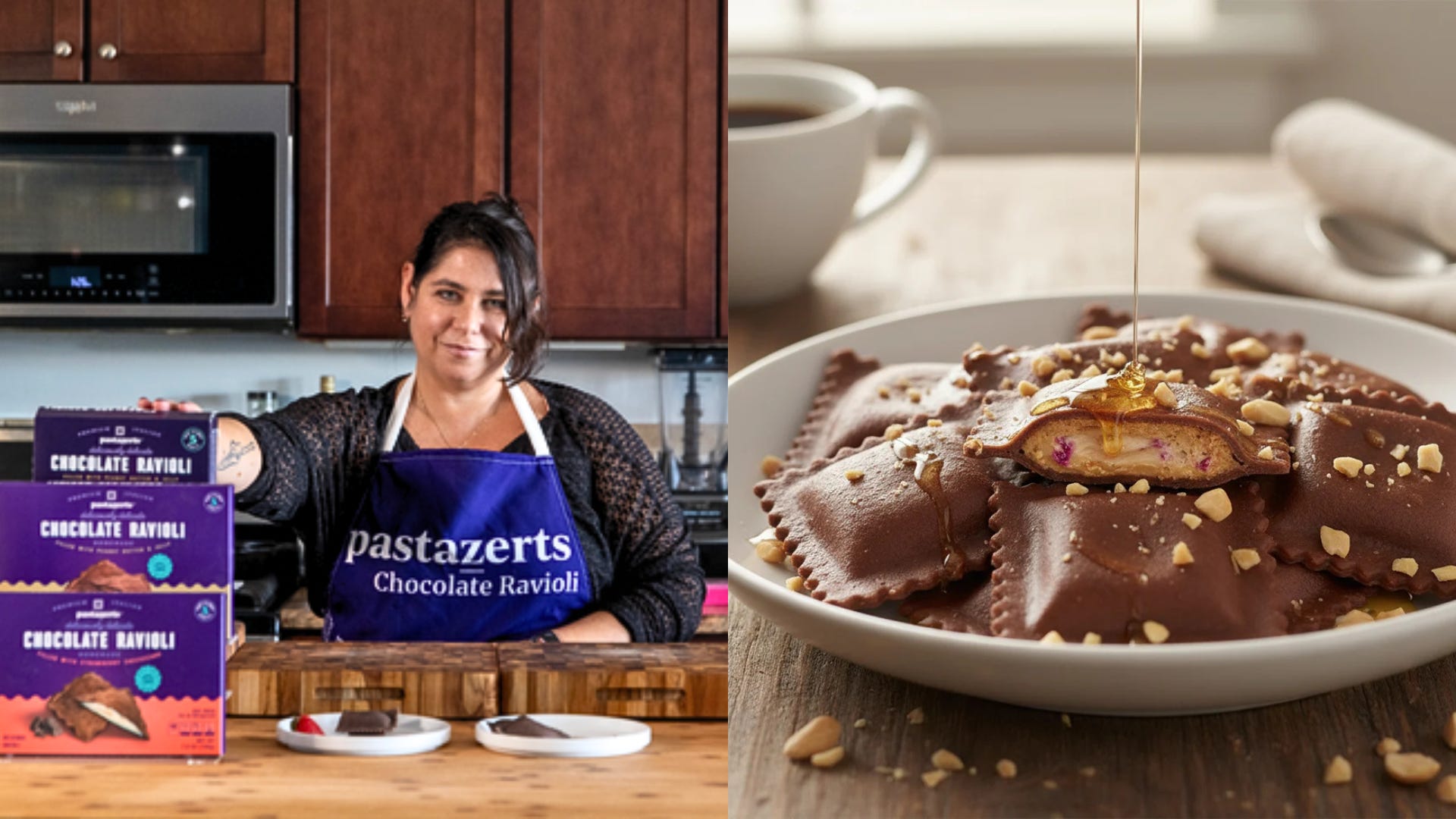
Stephanie Berwick was working in fintech when she started competing in the World Food Championships.
Her chocolate ravioli was a crowd favorite, but the real competition started when she launched it as a frozen brand. After a few pop-ups and 150,000 ravioli made by hand, Pastazerts has grown from novelty to national, with distribution in 250+ stores.
00:17 - The mind behind Pastazerts
02:08 - Kicking the boots off
04:34 - Pitch perfect
06:36 - Time’s up
09:06 - It’s all in the details
11:28 - Prep school
14:30 - Below zero
17:22 - One day to day one
Start by doing it yourself. Stephanie hand-made the first 150,000 ravioli in a commercial kitchen. “I wouldn’t change a thing,” she says. “If I hadn’t done it myself, I don’t think I’d feel confident enough now to push back with manufacturers.”
Raise small, grow fast. Stephanie wasn’t comfortable asking for money, so she raised $25,000 in debt from friends and colleagues. “It’s eye-opening to ask your former colleagues, former bosses, and parents and family for help,” she says. The money was gone immediately, but it took Pastazerts from 50 to 250 stores in four months.
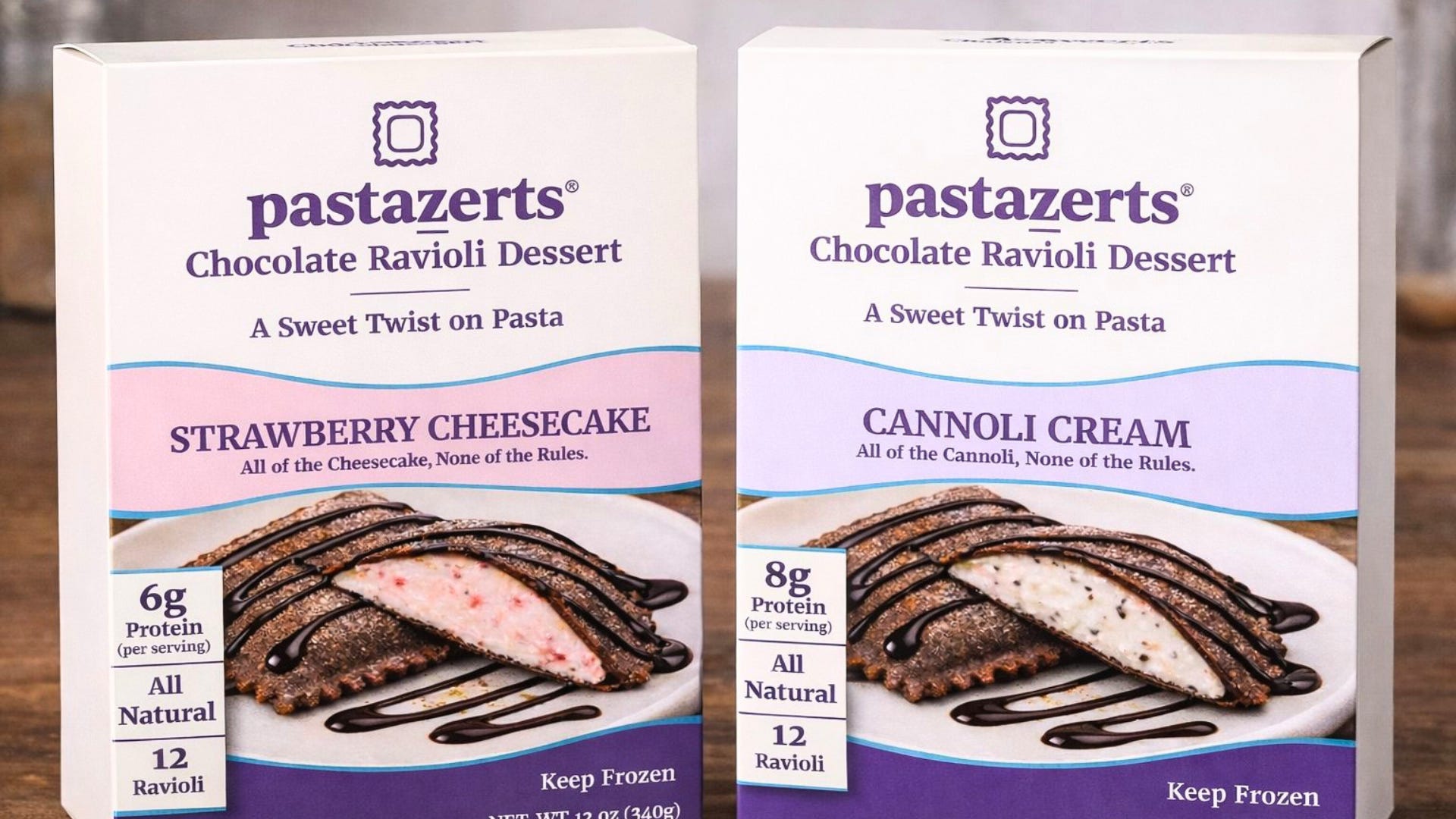
Packaging is the first thing buyers look at. Some retail buyers will make decisions based on packaging alone, without ever tasting the product. “Hiring a packaging designer is worth it,” Stephanie says. “They know all the FDA rules, where the UPC needs to go, things most founders don’t know, or don’t want to know.”
Frozen food makes everything harder — and more expensive. Cold storage, insulated shipping, and higher distributor fees add up quickly. Even with fast delivery, a package left outside on a hot day can melt. Frozen DTC became too expensive to scale, and today, 95% of Pastazerts’ sales come from retail and foodservice.
Nothing beats an in-store demo. “Dessert pasta” is unfamiliar. But once people try it, they buy it. Stephanie does in-store demos herself or hires an agency to run them. It’s an investment, but it works.
Market signal → The frozen aisle isn’t just peas and pizza rolls anymore. It’s a showcase for premium, global, and better-for-you innovation. But only brands that can manage costs and margins will last.
The cold truth about frozen food costs
In frozen, you’re not just paying for ingredients. You’re paying to keep your product cold 24/7. That adds up fast and eats into your margin long before you hit shelves.
Insulated shipping (dry ice, liners, expedited delivery)
Frozen 3PL storage
Spoilage and melt risk
Slotting fees (per SKU, per store, varies by chain + region)
Free fills (often one free case per store to launch)
Chargebacks (deductions for delivery or case errors)
Promo spend (discounts, demos, in-store ads)
Distributor fees (20–35% vs. 15–20% for shelf-stable)
Broker commissions (typically 5–7% of gross sales)
And if you’re curious about that $15,000 quesadilla recipe in Lesson 1, let’s start cookin’.


