


Everyone thinks they understand food.
Founders have opinions on ingredients. Investors ask about “clean labels.” But once you try to make a product, you realize how little of the conversation reflects how food actually works.
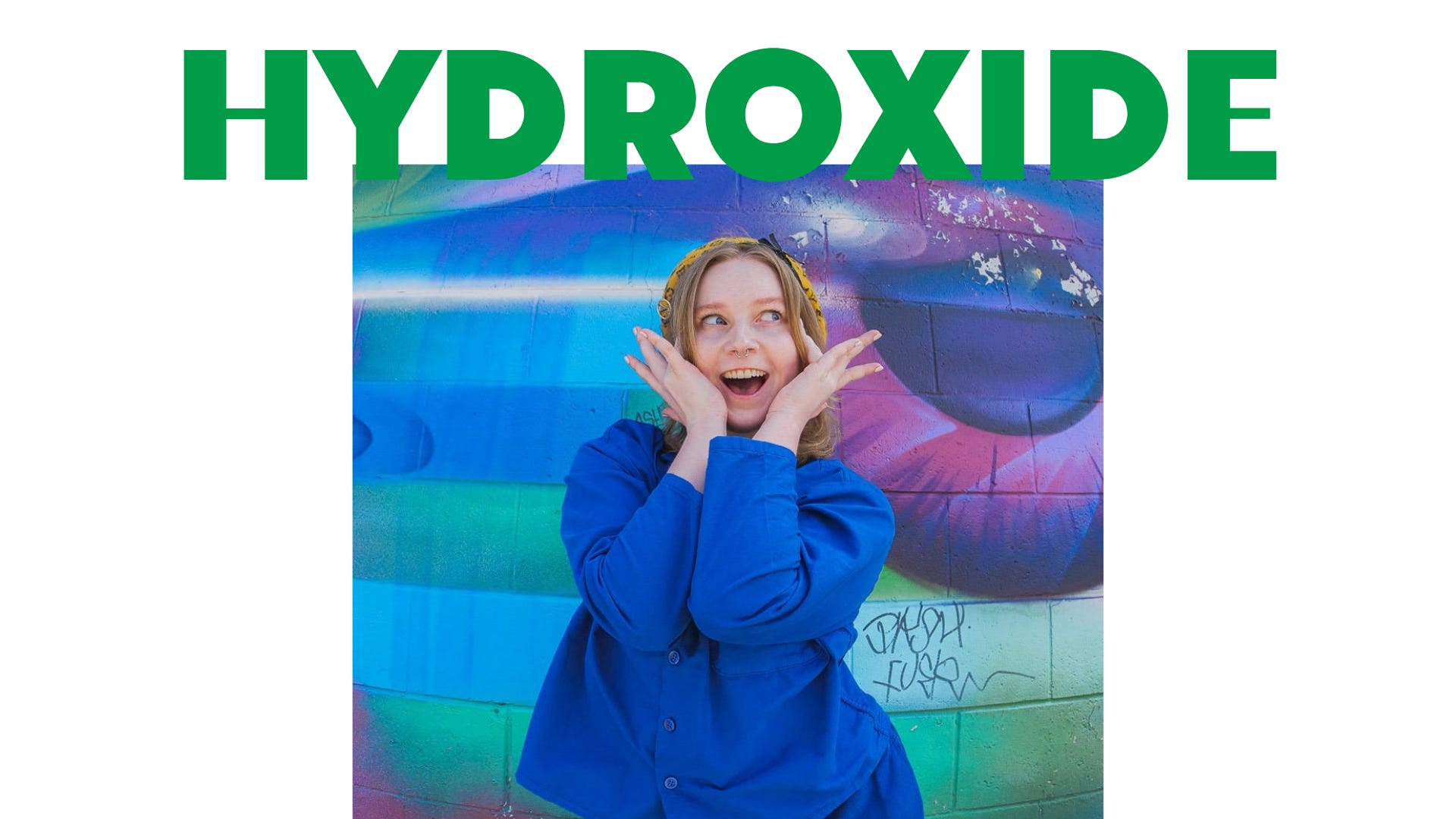
Hydroxide is a food scientist and content creator with over 450,000 followers and seven years in the industry, from plant-based meat and chocolate to food safety and quality. She translates the science, the myths, and the mechanics behind products people eat every day.
Feature Video:
00:14 - Beyond Immerse
02:16 - David Protein Bar
04:54 - Olipop
Video Q&A (below):
1 - When food scientists say X, they mean Y
2 - Dos and don’ts of working with a food scientist
3 - How the sauce gets made
4 - Final advice for founders getting into food
Text answers below have been edited for length and clarity. Full answers are in video. (We highly recommend watching!)
What’s really in Beyond Immerse, David Bar, and Olipop
Beyond Immerse
The base starts with carbonated water, followed by hydrolyzed pea protein. Hydrolyzing the protein breaks it into smaller pieces, which helps it dissolve in liquid and prevents the drink from separating. Protein also acts as an emulsifier, helping keep everything suspended rather than ending up with powder floating in water.
Then comes soluble tapioca fiber, which adds fiber but also improves texture. Fiber holds water almost like a sponge, which helps create a smoother, more stable drink.
Other ingredients manage flavor and stability:
Citric acid helps with acidity, flavor, and preservation
Malic acid adds the sour note people associate with sour candy
Stevia and monk fruit provide sweetness
Ascorbic acid (vitamin C) helps maintain color
Beta carotene adds color
Most of the formula is doing structural work, helping the drink stay smooth, stable, and drinkable.
David Bar
David organizes its formula into systems, something many modern food tech companies do.
The protein system includes milk protein isolate, collagen, whey protein concentrate, and egg white. Isolates have a higher protein percentage, while concentrates contain less protein but can improve texture.
High-protein bars tend to become dry and chalky, so the next layer is the binding system:
Maltitol, allulose, and glycerin retain moisture
Soluble corn fiber adds structure
Tapioca starch contributes elasticity and chew
Soy lecithin helps emulsify and stabilize the mixture
The fat system includes EPG (esterified propoxylated glycerol) and coconut oil. EPG behaves like fat but contributes far fewer calories, which helps David maintain very low calorie counts while still creating a rich mouthfeel. Most of the ingredient list is there to engineer the texture and structure of the bar.
Olipop
Olipop’s key innovation is its proprietary OliSmart fiber blend, which includes ingredients like cassava root fiber, chicory root inulin, Jerusalem artichoke inulin, nopal cactus, marshmallow root, calendula flower, and kudzu root. Some of these ingredients function primarily as fiber sources, while others may be included for additional functionality or differentiation.
The main challenge with high-fiber drinks is texture. Fiber can easily make beverages thick or sludgy. Olipop’s formula manages to keep the drink light and soda-like while still delivering significant fiber.
The sweetening system includes:
Cassava root syrup
Apple juice concentrate
Lemon juice concentrate
Stevia
Interestingly, Olipop uses slightly different fiber systems depending on whether the product is refrigerated or shelf-stable, since different fibers help control stability and water activity in different environments. The real achievement is that they created a high-fiber soda that still tastes like soda, which is much harder than it sounds.
When food scientists say X, they mean Y
Hydroxide decodes the terms founders encounter most, and what they actually mean for your product.
Water activity: The number one thing you need to know is water activity is not the same thing as moisture content. They sound similar, but water activity is used to change both the safety and texture of your product.
Lower water activity allows products to sit on a shelf without molding, growing bacteria, or develop pathogens. A quick hack is to increase acidity, increase salt, or increase sugar.
A classic example is the McDonald’s hamburger that’s been sitting out for seven or eight years without molding. People ask what chemicals must be in it. In reality, it’s the water activity. If there isn’t freely available water, mold and bacteria simply can’t grow.
Maillard reaction: Probably the most common chemical reaction in cooking. It’s basically what creates browning and flavor in cooking. When carbohydrates and amino acids react under heat, they form hundreds of flavor compounds. It’s the reason bread crust turns brown and why cooked meat develops that rich flavor.
Natural flavors: Founders, write this down: 21 CFR. That’s the Code of Federal Regulations, and it defines food labeling terms and ingredient rules. (Canada has the CFIA, Europe has the EFSA.) This is where you’ll find definitions for things like natural flavors. and it’s as broad as you’d expect.
Natural flavors can include spices, oils, oleoresins, distillates, extracts, edible yeast, bark, roots… almost anything derived from a natural source. It’s basically a catch-all term, which is why companies often use it to group complex flavor blends.
Kill step: It’s pretty much what it sounds like. Heating your product until the bad stuff dies. Not every product needs a kill step. Hot sauce is a good example. Many hot sauces aren’t boiled or sterilized; the acidity and salt make them shelf stable on their own. In other words, a product doesn’t have to go through a kill step to be safe.
Dos and don’ts of working with a food scientist
What every founder should know before stepping into the lab.
1. Give your food scientist time to play. Let them go into their little free range pen to experiment to their heart’s desire, to do stretch projects.
If you’re pre-Series A and the product isn’t done yet, don’t put a tight timeline on it. Your product is going to change from the idea in your head, and that’s okay. Give it four months minimum if you’re starting from scratch.
Ideally, it would be more like six months. However much time you think you need, double it. Food does not scale like tech. It’s not an app you’re building in your garage.
2. Focus on making your product taste good. This sounds sarcastic, but I really mean it. So many founders in food CPG want to change the world with their product. They want to add the fiber, the protein, the health, the function. But no one will eat it if it tastes bad. That doesn’t mean you have to make a deep fried Oreo, but you do have to make sacrifices.
And another secret is to focus on texture before flavor. A good texture can carry weak flavor. But even good flavor cannot save bad texture.
3. Definitely don’t buy fancy equipment. What’s so great about food is you can be really scrappy with just a few things. A basic blender, a basic oven, a SodaStream for beverages, that’s enough.
Food has to be elastic to scale. If your product falls apart on the bench with cheap equipment, it will not survive a co-packer. If it holds together with $50 equipment, it’ll hold together with $500,000 equipment. That’s when you know you’re ready.
4. Don’t get married to your product idea. As a founder, you have this dream and you want your dream to be seen by the world. And that is great. You should not doubt your dream. A strong concept is super essential to this business. But food is such an ever-changing entity and always going to be more than the sum of its parts.
When I was working in plant-based meat, we’d set out to mimic animal protein and end up with a secret third thing. Something that wasn’t the vegan version or the animal version, just its own product.
Your formula will change. Ingredients get yanked. Supply chains break. Take the ring off. Be dating your idea, not married to it. Sometimes what it becomes is better than what you planned.
If a founder came to you and said, “I want to make a sauce,” what would you say?
Before the flavor, there’s the formula.
The first question is whether the sauce will be refrigerated or shelf stable. That decision influences almost everything about the formula. Refrigerated sauces usually cost more because cold storage is expensive, but they often require fewer preservatives and less salt or sugar. Shelf-stable sauces are more complicated. You have to control water activity and pH so bacteria can’t grow.
You also need to think about packaging. Is it going into a bottle, pouch, or jug? For certain products, especially creamy sauces, you also have to follow low-acid canned food regulations, since acidity alone might not be enough to keep the product safe.
Another big question is whether the sauce is fully mixed or designed to separate, like a vinaigrette you shake before using. If it’s fully mixed, you’ll almost always need an emulsifier to keep the sauce stable. Garlic can act as a natural emulsifier, but in large-scale production it usually isn’t strong enough on its own. Companies often use ingredients like soy lecithin, sunflower lecithin, proteins, or mono- and diglycerides to keep everything consistent.
Once the structure works and the sauce stays stable without separating, that’s when the fun part starts: playing with flavor.
Any final advice for founders getting into food?
The product will fail. Make it anyway.
Don’t underestimate how much food science you already understand. If you cook or even just pay attention to how food behaves, you probably know more than you think. Also be ready for things to fail. Recipes won’t work. Products will taste bad. That’s just part of building in food.
But when you finally make something people genuinely love, it’s incredibly rewarding. Invest in understanding the science early, and combine it with strong marketing without letting either one stifle the other. Easy enough, right?


