


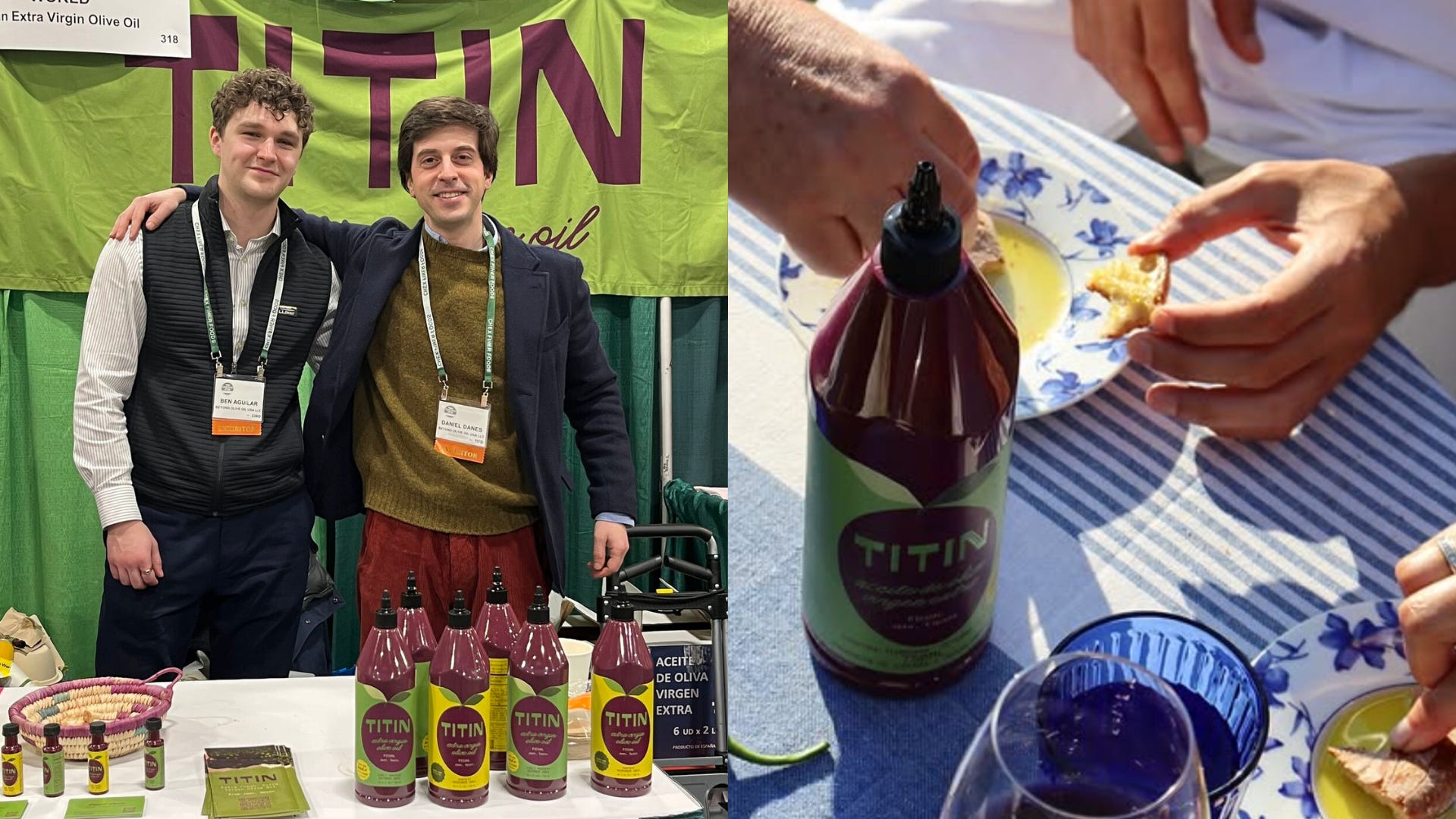
Meet Daniel Danés and Ben Aguilar, the partners behind Titin, an olive oil brand built from Spanish groves to U.S. kitchens.
They met at a CPG event in Boston. Daniel was pouring samples of an olive oil that didn’t taste like anything Ben had tried before. Bright, green, almost alive.
Daniel had left his career as in finance law in Madrid to build something of his own. Ben had been in risk management, with the same itch. Neither had built a CPG brand before.
Within 10 months, they went from an FDA consultation to landed inventory. Today, they have 5 East Coast distributors, 50+ restaurant accounts (including Michelin-starred restaurants), and 70+ retail accounts.
00:12 - The minds behind Titin
02:54 - It runs in the family
04:50 - Business in 10 months
07:34 - Purple reign
10:55 - Betting on back-of-house
14:19 - Old school in a new market
17:18 - Shooting fish in a barrel
20:19 - You have to be a little crazy
10 months: From FDA consultation to first container on U.S. soil
80/20: Food service vs. retail split
3× velocity lift in stores: When they do in-person demos
CPG is a contact sport. Daniel built the business by talking to everyone: store owners, distributors, chefs. Ben offered to help for free and later became a partner. “You have to ask for things and you can’t be ashamed to talk about what you’re doing,” he says. “Everyone’s in their own world.” When you’re new, no one is coming to you. You have to insert yourself into the room.
Start with the buyer who already speaks your language. Everyone said don’t bother with restaurants. “They buy canola. It’s a fight of pennies,” recalls Daniel. He ignored it, went after chefs who valued high-quality ingredients, and now 80% of their business is food service. Yes, margins are lower. But velocity is higher, there are no slotting fees, and you’re selling to the person who actually uses the product.
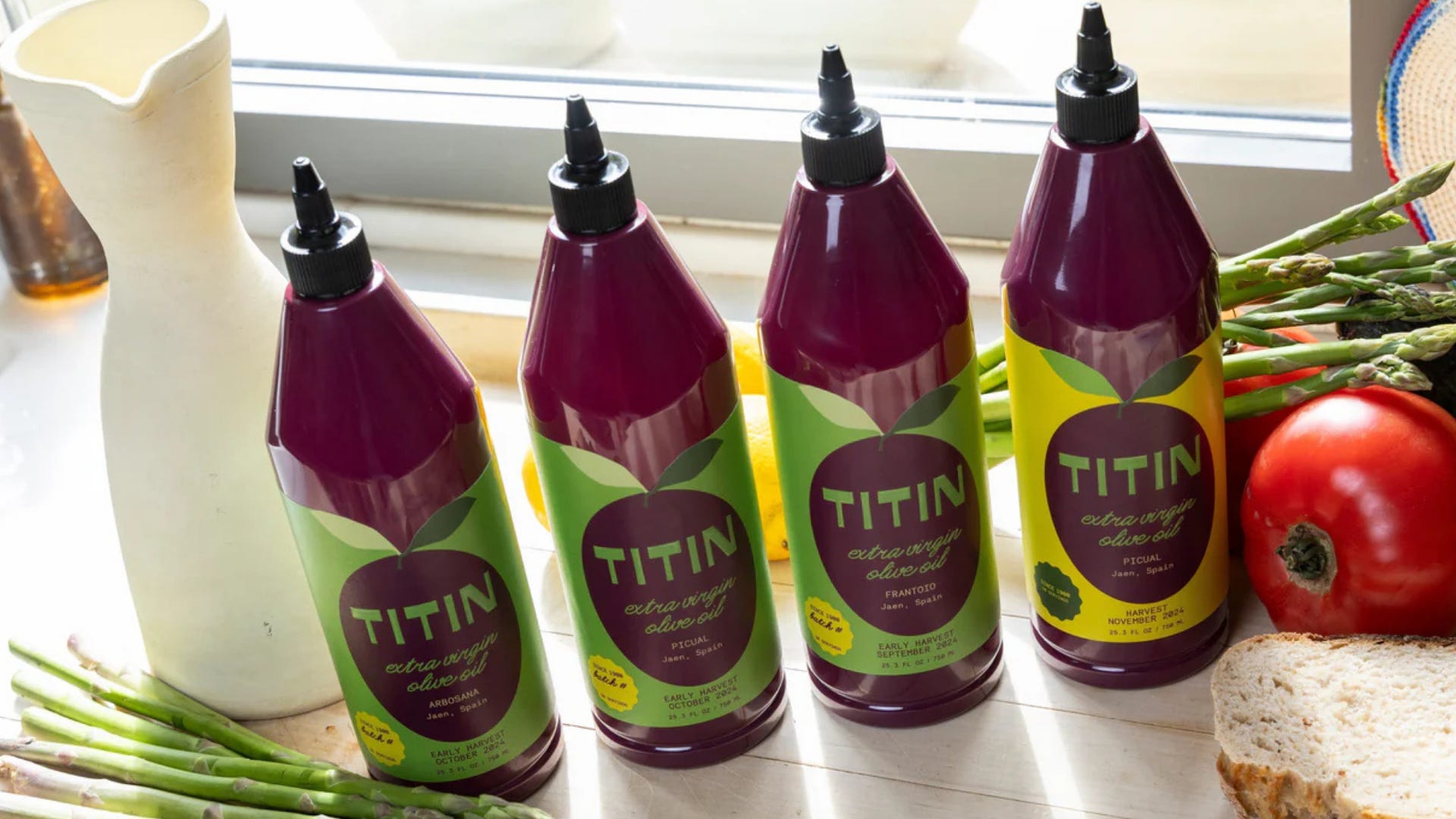
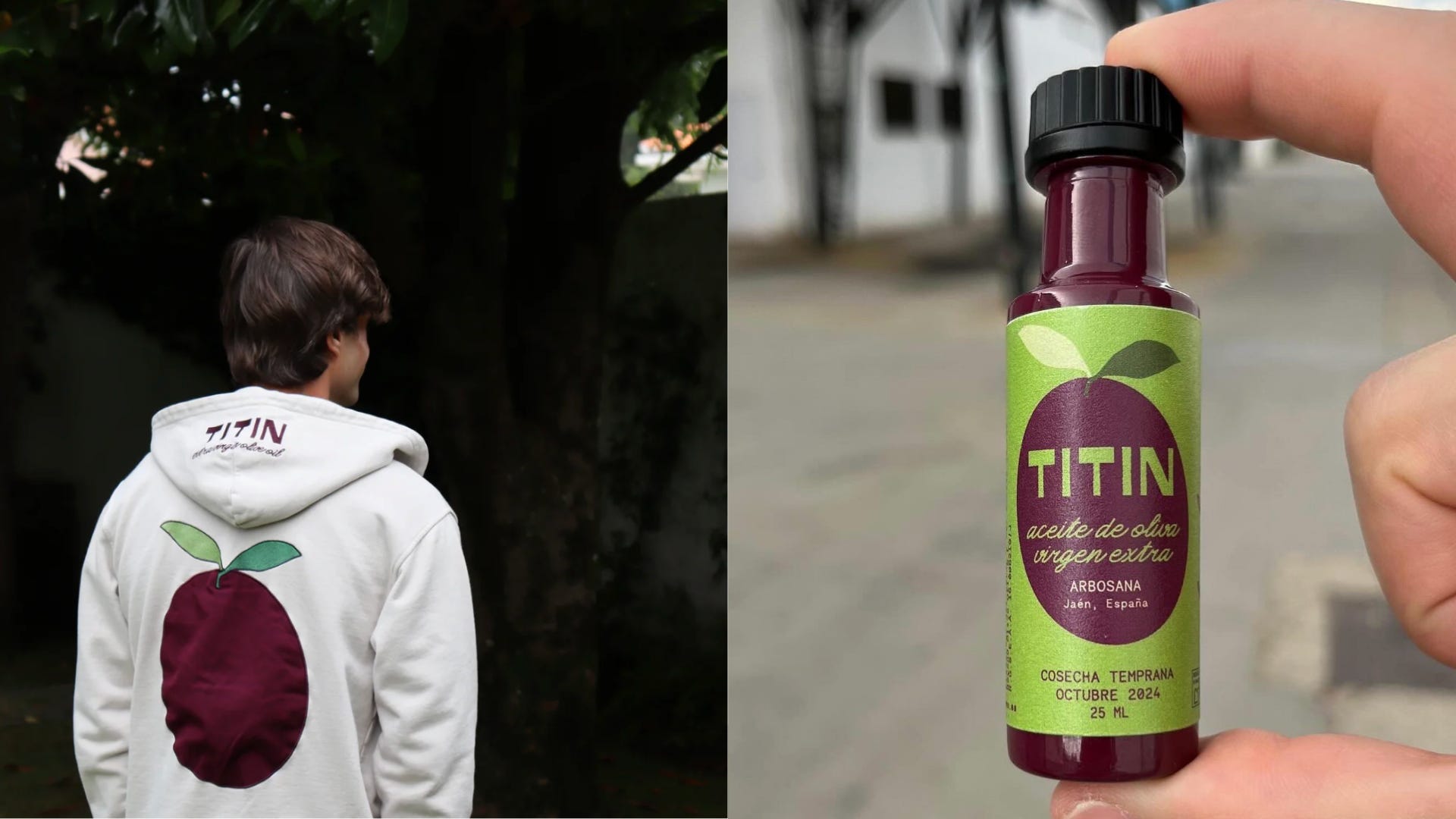
Your packaging decisions are sales decisions. The bottle shape, the color, the label. None of it is just aesthetic. Every choice impacts readability, shelf pickup, and velocity. Founders treat brand as identity. But in CPG, brand is a sales tool. If design doesn’t help the product move, it’s underutilized.
One try beats a thousand impressions. Olive oil looks the same online and on shelf. It only differentiates when you taste it. That makes paid digital a poor early investment for Titin. Instead, they run demos and see velocity increases 2-3x the category average. If your product closes on contact, your main job is to engineer that contact.
Most trade shows give you attention. Few give you orders. For an early-stage brand, big trade shows do one thing well: they make you feel part of the industry. What they don’t do is guarantee orders at a cost that makes sense. “Big trade shows are great for LinkedIn. Expensive for your P&L,” says Daniel. Focus on smaller, regional, distributor-led events. Same buyers, less noise, lower cost.
Market signal → Early brands aren’t starting in retail. They’re proving demand somewhere cheaper first: food service, demos, farmers markets. By the time they’re in stores, they already know it will sell.
Build your CPG brand… in this order
Get this wrong, and you end up with product and no one to sell it to.
1. Remove the blockers first. Regulatory, legal, technical. Find a specialist in your category and take care of it before you touch anything else.
2. Plan your supply chain before you need it. Lock in suppliers, logistics, and warehouse early. Costs and delays compound if you wait till the last minute.
3. Get real demand before you scale supply. Early buyers are proof and your best leverage. If no one wants it now, more product won’t fix it.
4. Set up distribution before you push growth. Make sure people can actually buy your product. Demand without access doesn’t convert.
5. Build a forecasting model on day one. Track velocity and demand from the start. Running out of stock isn’t traction. It’s a planning failure.


