


Behind every purchase is a stack of motivations most founders never see.
Uncover them, and the path to demand, loyalty, and scale becomes far more predictable than it looks from the shelf.
Seth Waite is a Partner at Schaefer, a buyer psychology firm that works exclusively with food and beverage brands. He breaks down the exact motivators behind why people buy, how it translates to sales, and why better-for-you is no longer a fringe trend.
00:16 - From law degree to food and bev
02:15 - Strategy decks don’t move product
3:33 - “Everyone” is not a customer segment
06:21 - Premium and better-for-you categories
09:09 - The Why People Buy Pyramid
13:41 - Hot girls eat tinned fish
18:05 - From 35-year-old finance bro to 65+ retiree

What was your first experience in CPG?
Coming out of law school, I knew I didn’t want to be a lawyer. I landed at Sam’s Club working on grocery, building early digital marketing capabilities, managing email and ads, and evaluating CPG brands.
I wasn’t the target customer, so I had to learn why people cared about 10 pounds of grapes or 20 pounds of chicken breasts. My first “aha” was realizing that the membership itself shaped behavior: people expected deals, exclusivity, and limited-time value. And they were buying in bulk.
For a while, the highest-grossing online item was a 2,000-pound pallet of emergency food. That’s when it hit me: every consumer brand has a place if it can differentiate, because the customer base is incredibly diverse.
At Schaefer, you work exclusively with F&B brands. What exactly do you do?
At Schaefer, we kept seeing that great creative didn’t matter if it wasn’t built on the right strategy. Marketing teams weren’t digging into research, and research teams weren’t translating insights in a way marketing could use. We try to close that gap with research grounded in marketing reality.
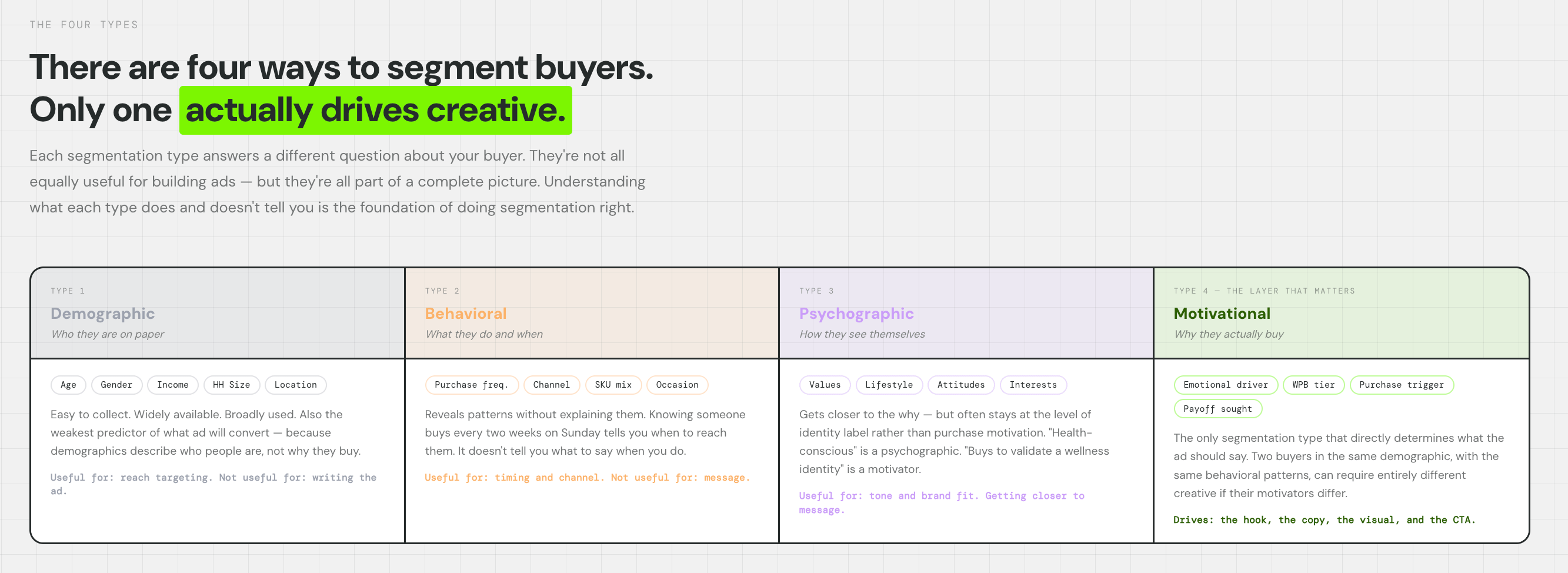
What we do more than anything else is segmentation. Who is your customer? And more importantly, who isn’t? It’s never 100 for 100. It’s usually seven or eight or nine people who are ready to purchase.
We move past broad buckets like “millennial moms” or “Gen Z” and le look at three layers: motivations, behaviors, demographics. We bring in analytics, sensory testing, and taste/texture work to support the behavioral insights.
Say a brand understands why their customer buys. Now what?
Once you know who your customer is and why they buy or don’t buy, that influences three things.
Positioning: How you show up in the market. Think Dunkin vs. Starbucks; same category, entirely different promise.
Offer: Is your price truly premium or just high because your costs are? We use tools like Gabor-Granger and Van Westendorp to understand willingness to pay.
Messaging: Which drives packaging, campaigns, and creative.Positioning: how do we show up in the market, like Dunkin versus Starbucks. Wildly different for different customers even though they both sell coffee.
Can you share a specific case study?
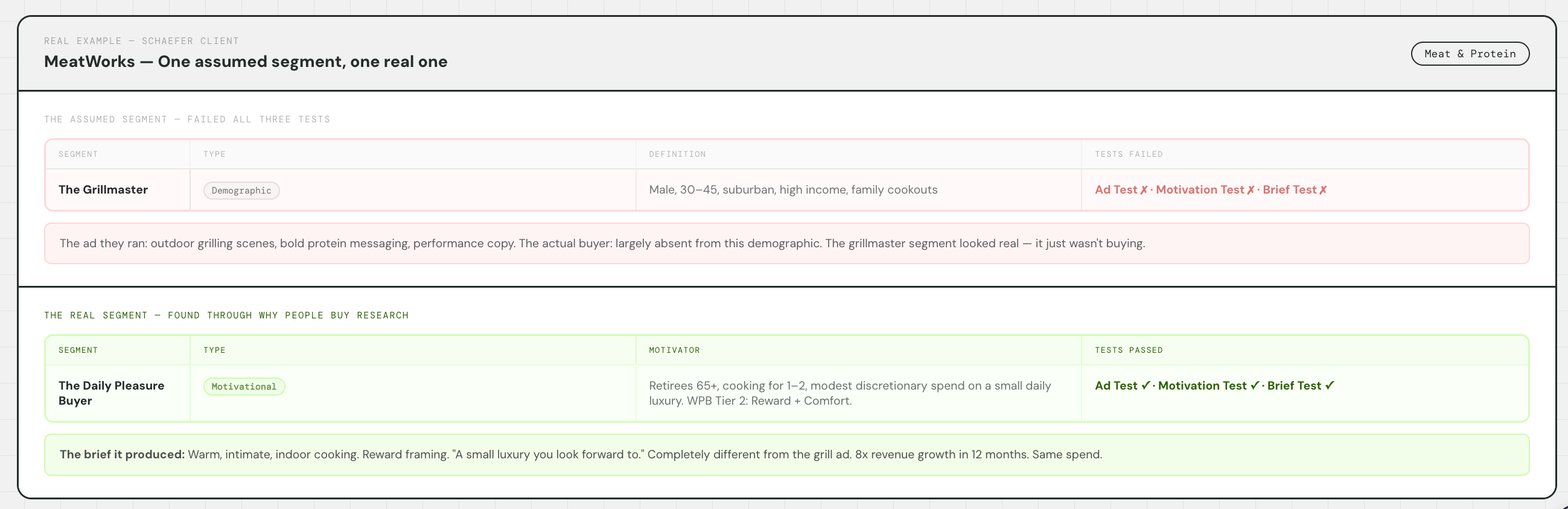
We worked with a company that was absolutely certain their customer was a 35–45-year-old male with a household of three or four and a high income. But our segmentation revealed it was actually a 65-plus woman on a fixed income of $50,000–$60,000.
They’d been messaging to “grill bros” with $3,000 grills. When they shifted to helping this woman create an indulgent experience she’d been aspiring to, everything changed. In six months they 4x’d sales, decreased churn, and every metric went through the roof once they realized what customer they were really serving.
What do you think of masstige?*
Masstige works in the right retail environments. Whole Foods can pull it off better than Walmart. You benefit from the company you keep on shelf.
If you’re trying to be a premium brand in a low-value category, it’s more complicated because it comes back to expectation. What are your core customers expecting?
But overall, premium is growing as people redirect discretionary income toward food and beverage instead of homes or cars. They’re shifting spending toward premium CPG because it benefits their day-to-day lifestyle.
* A marketing term combining “mass” and “prestige;” relatively inexpensive goods marketed as luxurious or prestigious.
How about better-for-you?
Better-for-you is not a trend anymore. It’s shifting out of a fad status, and is no longer just for weirdos buying from specialty stores. Big food brands are shifting their own products and retailers are significantly changing, all because consumers are demanding them.
We’ll keep seeing this play out in a mass way. The challenge for specialty stores is staying on the cutting edge without drifting into extremes.
Our job is to educate them and treat them as intelligent individuals, while recognizing that psychology will always play a role. Hence, why we do what we do with packaging design, product testing, and everything that comes with being a founder.
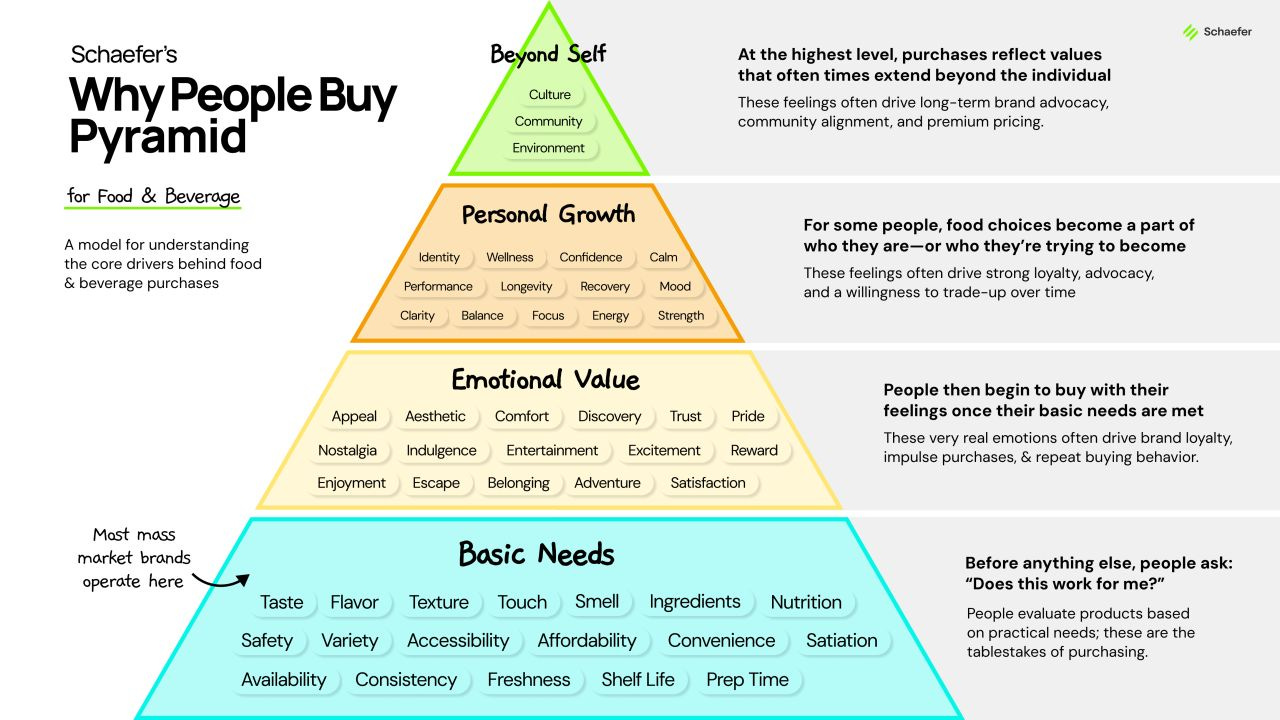
What is the Why People Buy Pyramid?
People usually start with demographics, but demographics don’t explain why.
Our framework starts with motivators.
Functional needs: Taste, texture, satiety. If it doesn’t taste good, nothing else matters.
Emotional values: Nostalgia, identity, perception. Carts and baskets are open for a reason. One, to put things in. But also, everyone sees what you’re purchasing. We absolutely care about how we’re perceived.
Personal growth: Better cognitive health, weight goals, muscle gain. These are major drivers behind functional foods today.
Beyond self: Community and connection.
Most brands have a mix of motivators. Nostalgia alone isn’t powerful, but nostalgia plus two other motivators can be a superpower.
You’re essentially building your own pyramid because you’re not going to have all 30 motivators. Value brands won’t feel indulgent; luxury won’t trigger value cues. It’s about finding the right combination for your customer.
What’s a brand that’s reached all these levels?
Fishwife is a great example. The product itself isn’t unusual, it’s canned fish. But they’ve elevated it. They’ve taken a small, older, dusty category and said, “Let’s add some flavor profiles that don’t exist.”
They’ve convinced people who’ve never bought sardines to be all about it. Their packaging is gorgeous and instantly recognizable. They tell a beautiful story about who a Fishwife is. They move from basics to indulgence and into personal growth with “Hot girls eat tinned fish.” It’s an identity item and they’re selling millions of dollars of merch because they’ve built a community beyond what’s on the plate.


