


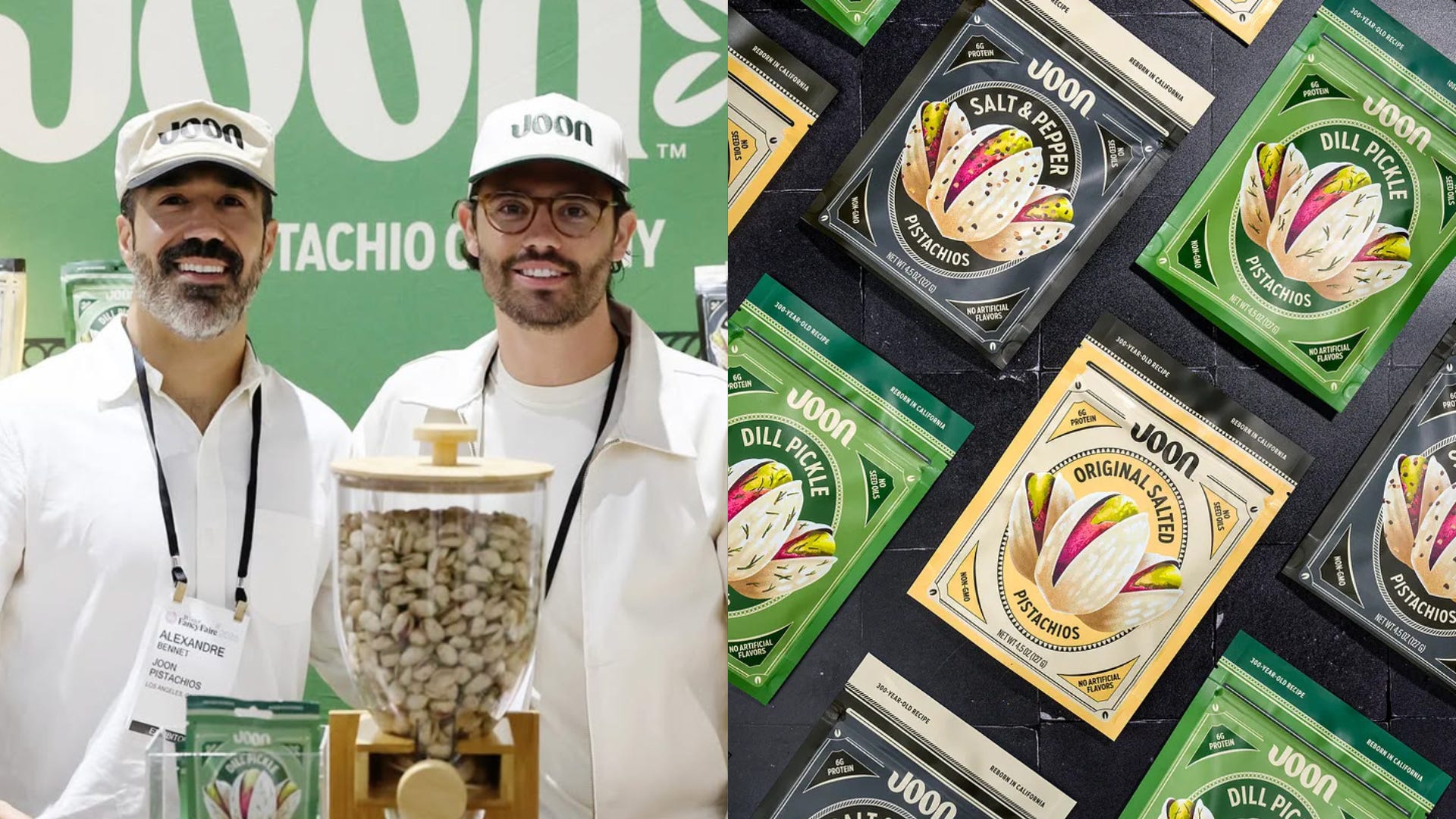
Meet Cody Allen and Alex Bennet, co-founders of JOON, a flavorful pistachio brand rooted in a 300-year-old Iranian family recipe.
Alex grew up eating pistachios his mother brought back from the family farm in Iran. Cody spent summers loading trucks in his family’s food distribution warehouse. Both wanted to start a food brand, but never had the right idea… until pistachios.
“I always thought all pistachios were the same until I tried some of the pistachios here stateside,” says Alex. “That’s when I realized we had something different.“
Nine months in, JOON is in 2,400 doors, cashflow positive, and scaling production runs to 20 pallets. This is how they built a CPG brand by trusting fundamentals over formulas.
00:11 - The minds behind JOON
02:32 - Pistachios are popping
05:31 - Not your dad’s pistachio
08:32 - Iranian roots, California grown
10:46 - Ahead of the curve
14:10 - The Faire flywheel
17:07 - 2,400 and counting
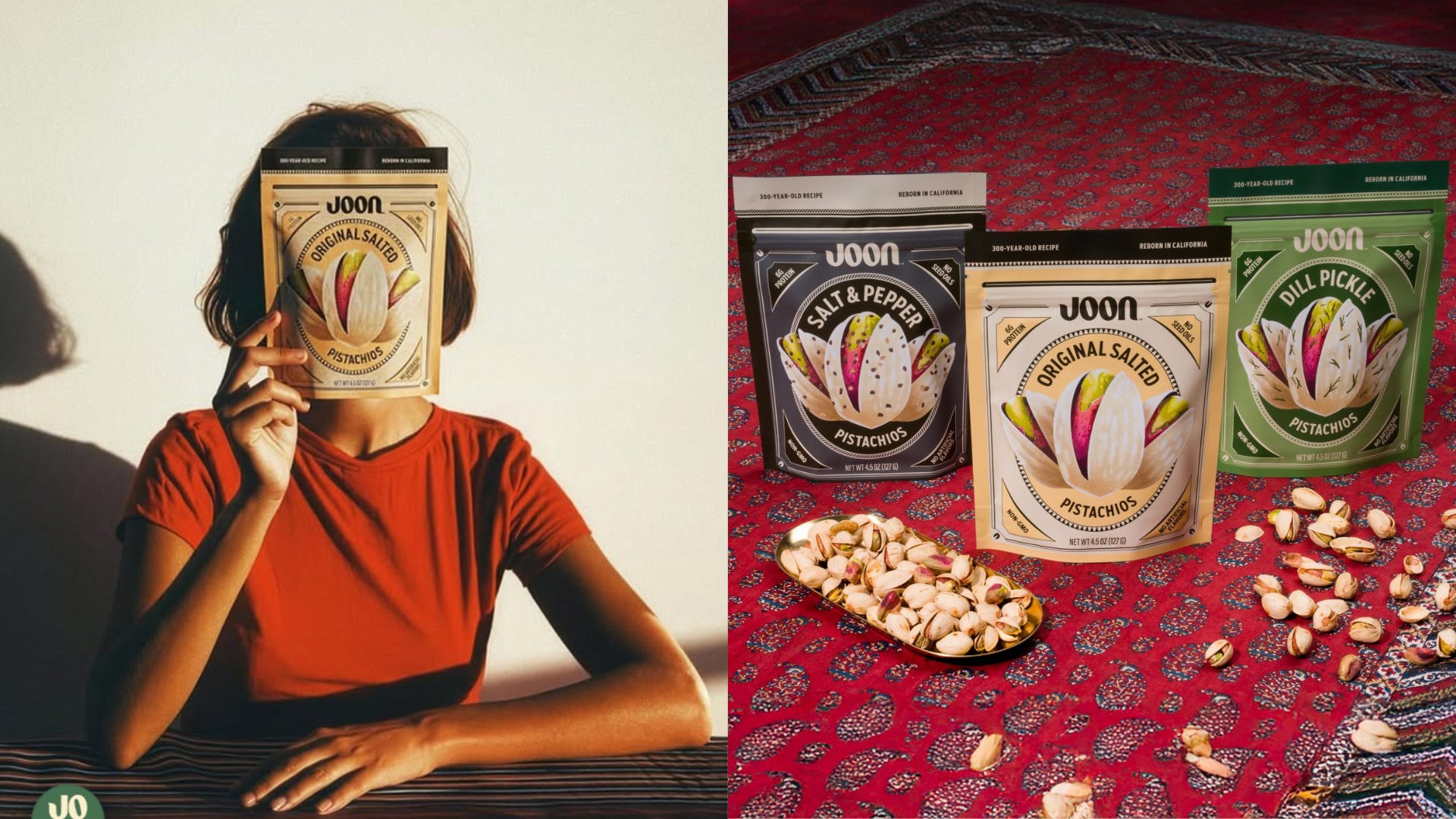
2,400 doors in 9 months: National distribution through independent retailers before going big chain.
$100k bootstrapped: Spent on food scientists and production from day one.
80% of pistachio buyers are 45+: JOON designed retro branding to capture that demo and the 18–35 year-olds who aren’t buying yet.
Invest in what you can’t afford to get wrong. JOON spent its first real dollars on food scientists. Those scientists didn’t just help perfect the recipe. They sourced ingredients, vetted manufacturers, and stayed on-site during the first three production runs. “For us, that was the best investment we’ve made to date,” Cody says. Sometimes the scrappiest move is paying for expertise early.
Build the plane before you’re in the air. Everyone told them it was too early to invest in inventory systems. They ignored that advice. “Setting things up ahead of when you need it, before you hit that ‘oh shit’ moment, that’s what’s allowed us to scale quickly,” Cody says. Most founders build infrastructure in crisis mode. The smart ones build it before the crisis arrives.
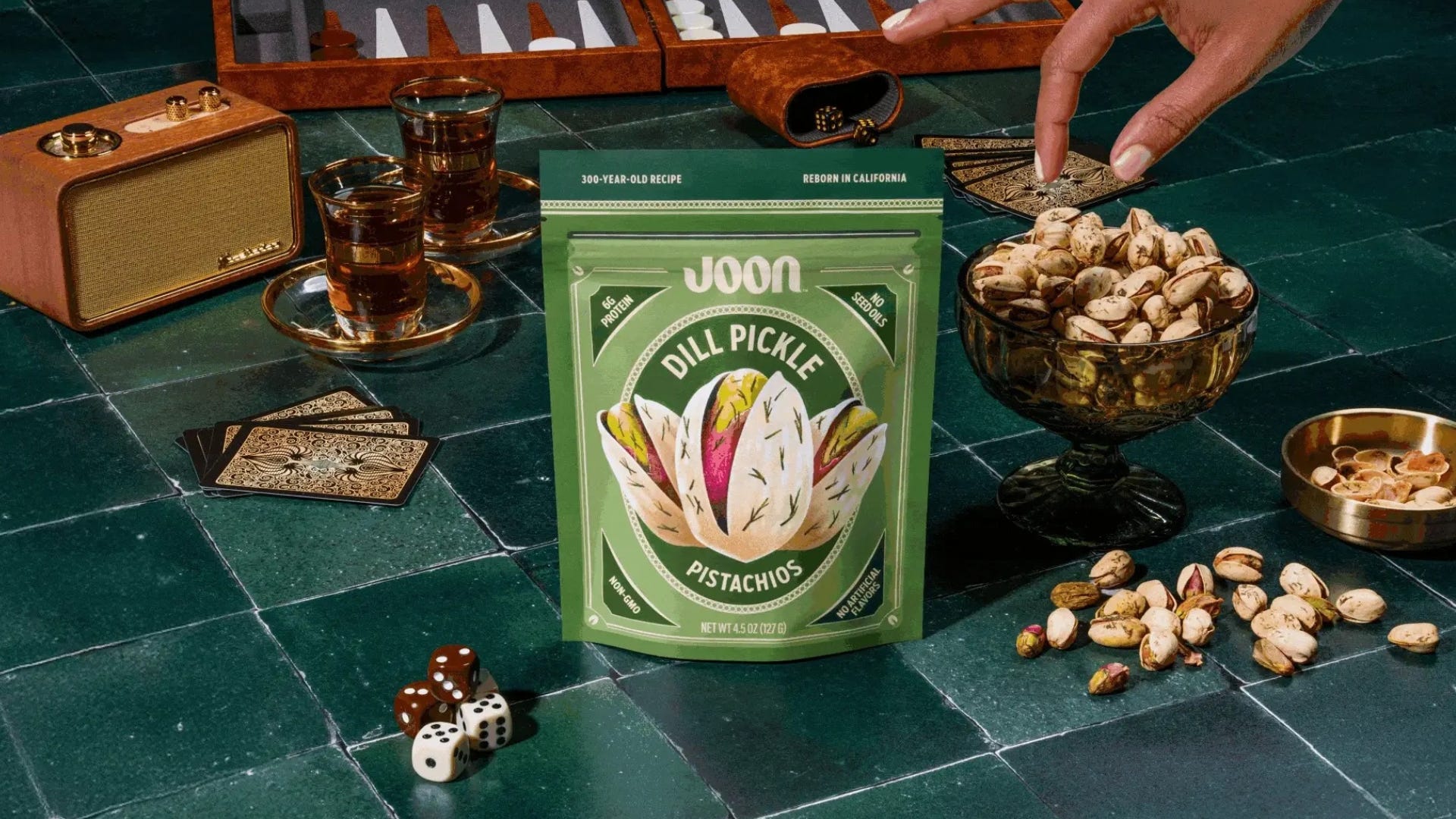
Don’t design for Instagram. Design for the endcap. JOON spent nearly two years on its packaging because, in retail, the bag is the ad. It works 24/7, doesn’t depend on algorithms, and never asks for a higher budget. Instead of rushing to paid media, they designed for the moment that actually matters: a customer standing in front of a shelf. The result is a product that stands out, and a Dieline award to prove it.
Use data to narrow, and your gut to decide. They sent surveys, studied USDA data, mapped the category. But their #1 seller still came from instinct. “Dill pickle was not an analytically driven decision,” Alex says. “It was us trying it and saying, this is the best flavor we have.” Do the research. Then know when to ignore it.
Turn your distributors into your marketing team. Most founders treat distribution as a one-way transaction. Alex and Cody treated it like a flywheel. They used Faire to get into ~450 independent stores, many with 5k–20k followers. Every restock became a free Instagram post. “We get a lot of organic social media presence through that. It’s really helped spread the word a tremendous amount,” Cody says.
Market signal → The CPG playbook just inverted. Building right matters more than launching fast. When mistakes are expensive and fixes compound, the advantage goes to the brands that invest in solid infrastructure.
The Faire flywheel
Turn retail distribution into organic marketing.
1. Pick stores with audiences. Independent grocers with ~5k+ Instagram followers that engage their customers.
2. Win the restock, not just the initial placement. First POs matter. Second POs matter more. Create repeated moments for stores to share.
3. Track which stores post organically. Not every retailer will talk about you on social. Double down on the ones who do. Those are your marketing partners, not just distribution.
4. Use Faire as a shelf-life release valve. Traditional distributors want ~75% shelf life. Independent retailers are more flexible, and can save your inventory and sanity.


