If food scaled like software, we’d all be unicorns by Q2.
But food has factories, freight, and fickle taste buds. Food is atoms, not bits. Everyone talks about innovation in food. Few acknowledge how messy, costly, and glacial the adoption actually is.
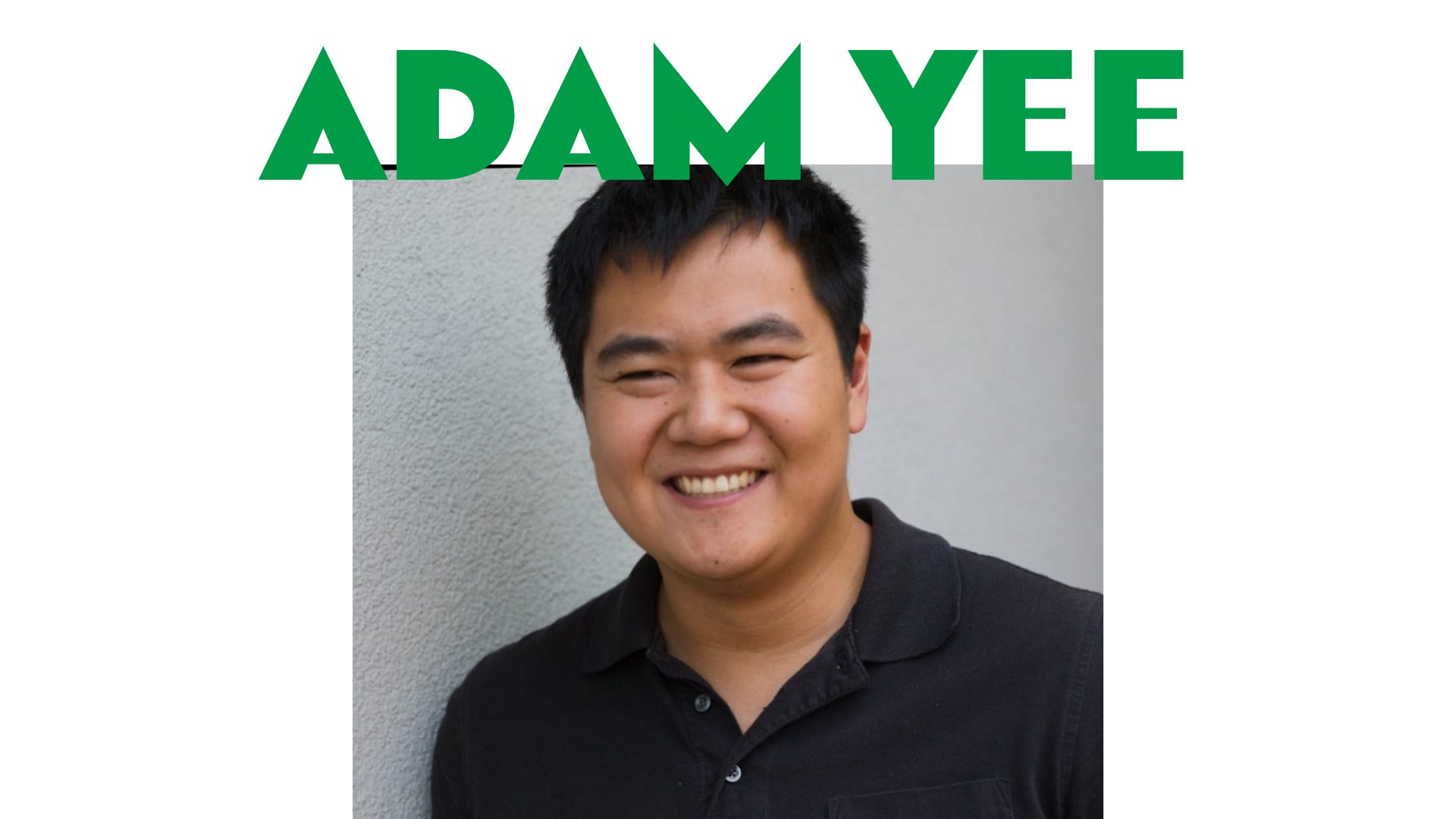
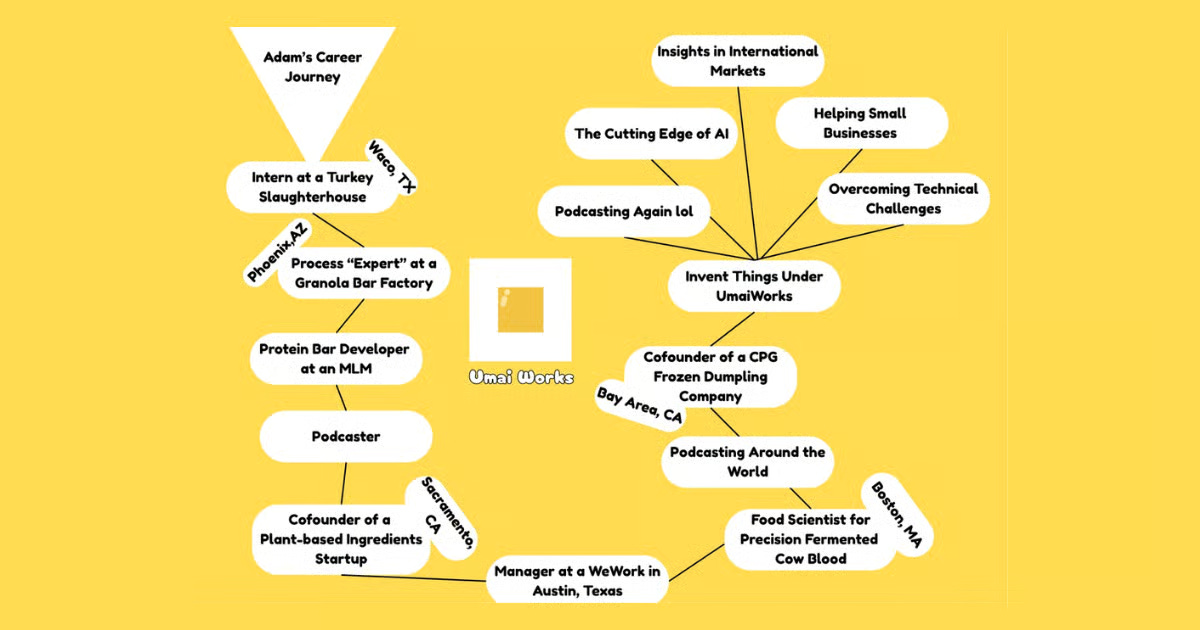
Adam Yee is a food scientist, serial entrepreneur, and podcaster. From 4 a.m. shifts in a granola bar factory to founding venture-backed startups like Better Meat Co. and Sobo Foods, he now leads Umai Works and helps turn big food ideas into real products.
00:10 - Plant based meats have not gone well
01:32 - Story, problem, value proposition
03:16 - This isn’t a transactional game, it's a relationship game
04:58 - Making a product is now easier than ever
06:11 - Food scientists care more about the product than the founder
08:13 - Science always lies beyond the hype
10:35 - We kind of don't care about the planet anymore
For people who don’t know you yet, can you give a quick introduction?
My name is Adam Yee. I’m a serial entrepreneur, food scientist, and I guess some people call me a podcaster and AI expert nowadays. I don’t know if I like those titles, but mainly what I do is help food businesses with their food problems.
I also host podcasts such as My Food Job Rocks, a weekly podcast where we interview professionals in food, Maybe Food Maybe Tech, a weekly news commentary on technology and food, and Food Products FAQ, a 10-part mini series about what food scientists look for when developing food products..
How do you work with CPG founders?
I use a questionnaire to filter people in:
Can they explain their story?
Can they explain their problem?
Can they explain their value proposition?
Then we shape the idea. I call this product sculpting, which is I do a little bit of research, understand market competitors, the ingredients, the nutritionals.
I also focus a lot on leveraging relationships. I connect you with my suppliers and manufacturers. This is not a transactional game. It’s a relationship game. These people have jobs like you, they are experts in what they do.
Making a product has now become easier than ever. You can literally go to a factory and negotiate with them to make this product. The harder part is, how do you manage distribution and velocities? That is a harder game.
What do food scientists understand that founders don’t?
I think food scientists care more about the product than the CPG founder. Honestly, in a CPG business, the product is a very small component. It’s actually more about distribution and honestly, the abuse you get from a distribution system.
Really, the biggest innovations come from the ingredients. When someone finds a unique way to use an ingredient, that’s where the innovation comes in. When you think about a CPG company or a product, every ingredient in that product actually has a whole industry behind it and a whole lot of innovation.
Say, for example, I’ll make a soy protein. How do you extract it? Okay, you extract the protein. How do we concentrate it? How do we put into a shake? How do we put into a bar? Those are all really complicated science things a lot of CPG companies don’t care about.
What’s the biggest misconception about scaling a food company?
I think there’s a huge disconnect in how people think food is made vs. how it actually is. Our perception of scaling comes from software, and it’s warped our expectations — the idea that a food company can scale like a tech company. This was probably the biggest flaw in what we dub as “food tech” (basically a food company that can raise at tech valuations).
One of the core lessons I learned is complexity tends to bite you in the ass. Anything complex about a food product will exponentiate in cost and time as you scale. It’s important to be flexible when it comes to simplifying your product, but it’s a hard decision whether to keep or remove those complexities.
I always recommend to think simple first, then evolve as you build. But if complexity is your secret sauce, you better figure out every way for it not to screw you in the future.
What tech should CPG companies be using right now?
You’d be surprised how low-tech most CPG companies are. It’s a low-margin business that makes technology less of an importance than you think. A lot of companies I work with don’t even use Excel correctly. There’s just too many things to worry about besides technology.
I’d only consider software when you start to hire employees. Currently, the only AI tool I would recommend is ChatGPT (the $20 dollar version).
So can AI develop a food product yet?
I was fortunate to be recruited by Food Systems Innovations and Stanford University to evaluate how LLMs like ChatGPT could help with food scientists. We took the nutritionals, ingredients, and sensory results of about 20 plant-based meat products and ran a whole bunch of different prompts.
We found that ChatGPT can generate a good experimental design to improve your product based on sensory feedback, which I think is really cool. But more research is needed to see if the experiments will actually work in practice. [Link to the published paper.]
We are scratching the surface on how this technology will affect food companies. I also think there will be a lot of bad tools made by non-food industry firms that will put a stain on using this technology. It always happens that way.
If you were starting a food company today, how would you use technology?
The only way someone is going to succeed with technology, specifically AI, is if it produces a noticeable and successful output.
We see this in ingredients all the time: there’s a viral product (like allulose or epogee), food scientists reverse engineer it, and it turns out the success came from one ingredient used in a specific way.
I think the same will be true for AI tools. But the correlation between a startup’s success and a specific tool will be hard to pin down. I don’t think it will be product-specific. It’ll show up in the speed of successful outputs.
So if I were launching today, I’d get to an output as fast as possible using technology. Then test, test, test.